 Official hotline:021-61905265


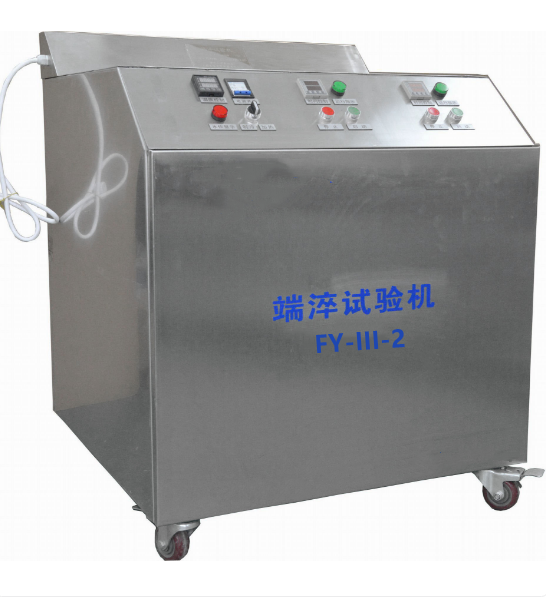
Ceramic tester
The FY-III test machines for end-of-pipe beryllium are designed and constructed in accordance with the specific test requirements for end-of-pipe beryllium tests according to the national standard GB/T225-2006 (the end-of-pipe gill fire test method for steel trophies (Jominy test)) and can be tested for standard material beams.
The meaning of gill-to-penetration: Tritium-to-penetration is an important thermal process performance of steel, an attribute of steel, which refers to the ability to form a horse during a steel-to-heavy fire. It is generally expressed in terms of cylindrical depth of the trotospheric depth or a curved distribution along the hardness of the cross-section.
The test for diarrhea generally considers that, except for a molar, a certain amount of non-map tissue is allowed. The distance from surface to centabytes (i.e., the layer consists of 50% molars and 50% amophiles) is generally used as a deep diarrhea. The deeper the trophies, the higher the permafrost of steel.
The new FY-III-2-series luminium tester is based on the FBD series of the company’s products, which requires that the requirements of the GB/T225-2006 (Steal Tirtation End Method (Jominy Test)) standards be fully met.
The FY-III-2 tester for end-end beryllium has been improved to have a high-tech content, be more stable than the previous generation, and be more user-friendly, compared to the normal beryllium tester. The digital charade time control system is used to automatically complete the start-up-automatic water-firing-end-end-end-to-end alert cycle and to design the entire holstery, so that it is well structured, easy to use, easy to maintain and repair.


