The steel contains elements such as oxygen, nitrogen, sulphur, which are at high temperatures, low solubility in the steel, and are fertilized at room temperature, and are combined with iron and other metals, to become non-metal-based pellets. In addition, external materials such as slags, fire-resistant materials, and sand may be mixed into the steel to form non-metal pellets.The sources of steel and non-metallic binders can usually be divided into two categories:
One is foreign non-metal smelting, i.e. slags and fire-resistant materials are recoiled into steel fluids, while the other is inherently non-metallic smelting, i.e. the production of physico-chemical reactions, such as oxides, silicates, sulphides, etc. during smelting and smelting.
Non-metal binders can be classified by chemical composition or plasticity.
I.By chemical composition of the stench
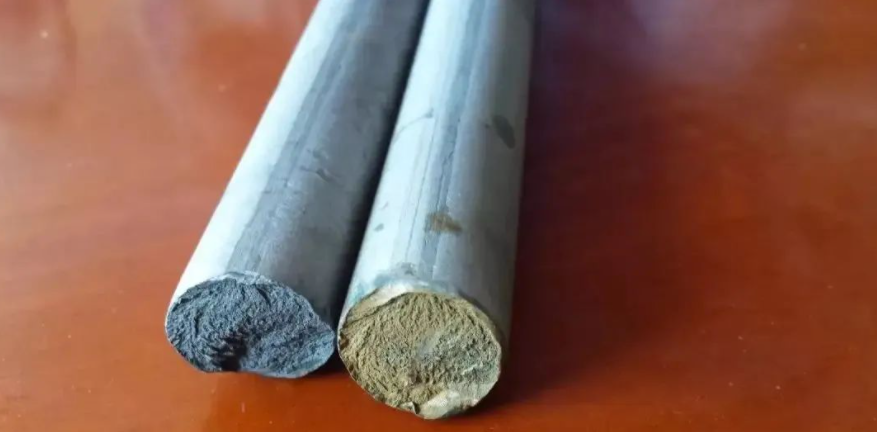 Figure1a The open-view field is grey
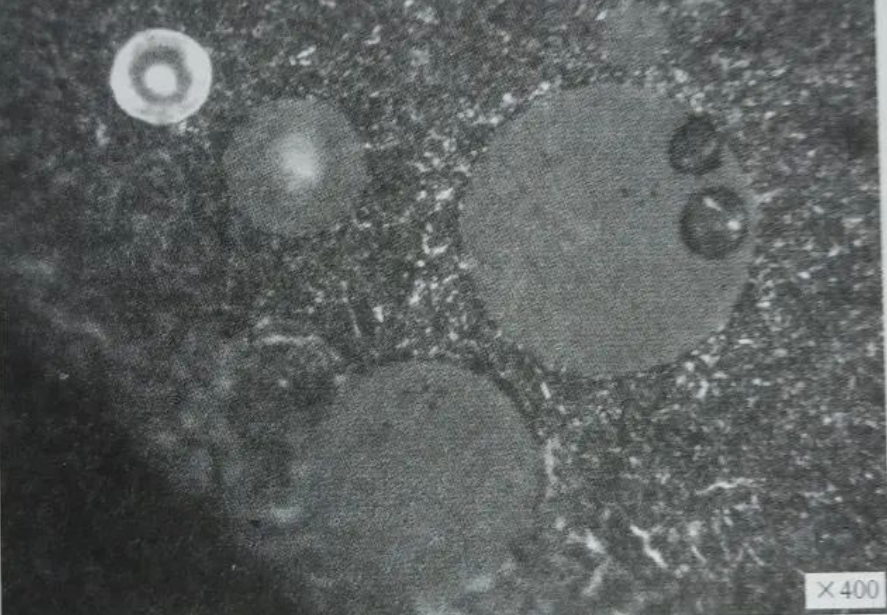 Figure1 b I'm turning towards light observation.
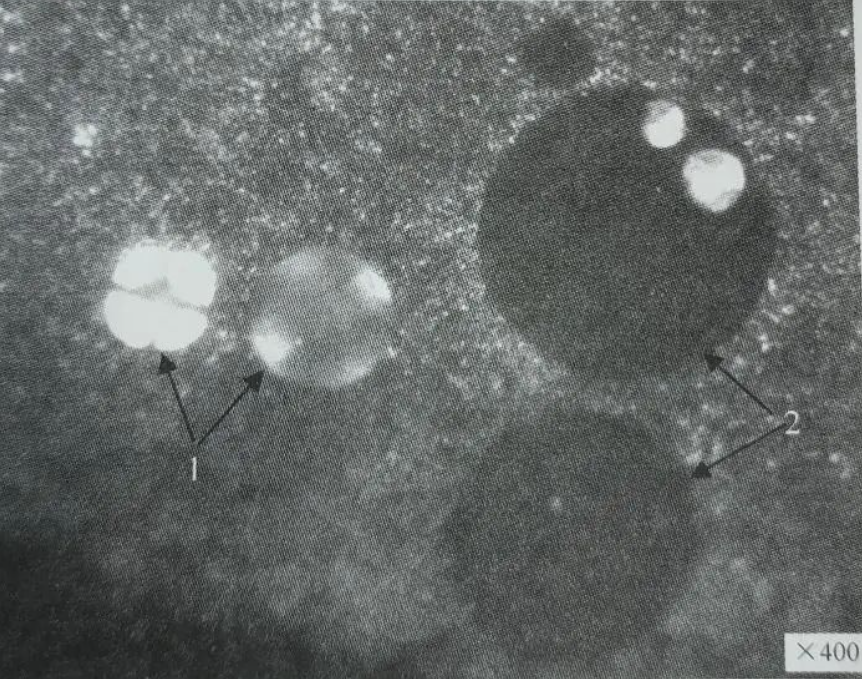 Figure1c Darkfield Observation
Figure1 Complex oxides and silicate glass
1Simple oxides areFeO、MnO、Cr2O3、Al2O3、SiO2、ZrO2、TiO2, which is typically in a particle or spherical distribution in steel.
Complex oxides include sharp crystal-like oxides and various calcium silicates, which have a melting point higher than the smelting temperature of steel and have a fairly wide range of changes in composition, and are solid in steel fluids and are multi-phased complexes,As shown in the figure.1Arrow in2as indicated.
2Silicate and silicate glass
The chemical formula for this kind of groceries is available.lFeO·mMnO·nAl2O3·pSiO2It is indicated that the composition is complex and usually multi-phased.
Some melted silicates are less than crystallized because of the faster cooling of steel fluids when they are condensed, resulting in a glass state in whole or in part, e.g.FeO·SiO2(Crystal silicate)MnO·Si2O(manganese silicate) etc., e.g., figure1Arrow in1as indicated.
3Sulphuride
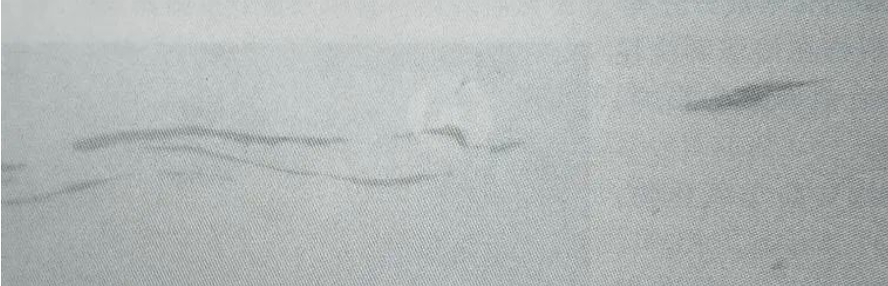 Figure2 Sulphides mixed 400X
In steel, mostly byFeS、MnSorMnFe)SWhen there is a spherical distribution of steel, or a crystal line of poles, chains, composts, and seeding particles, there are also a blocked, irregularly morphous, random distributions, as shown in the figure.2as indicated.
4)Nitrogen.
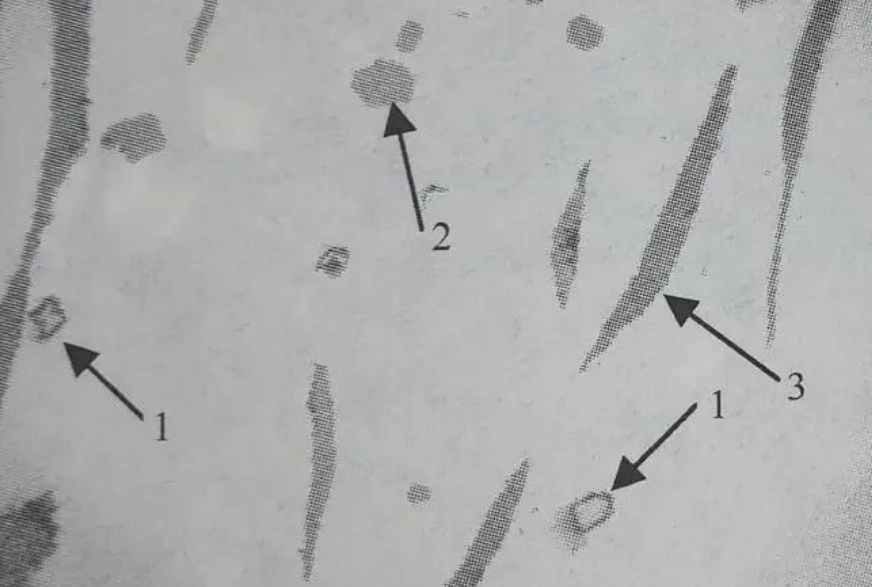 Figure3 Nitrogen and oxides mixed 400X
1-Nitrogen oxides;2-Oxides; 3-bared graphite
II.By plasticity of the stench
Because of the different plastic properties of thermal pressure processing in steel, the degree of deformation varies, and can be divided into the following types:
1- ♪ I'm a little girl ♪ - ♪ I'm a little girl ♪ 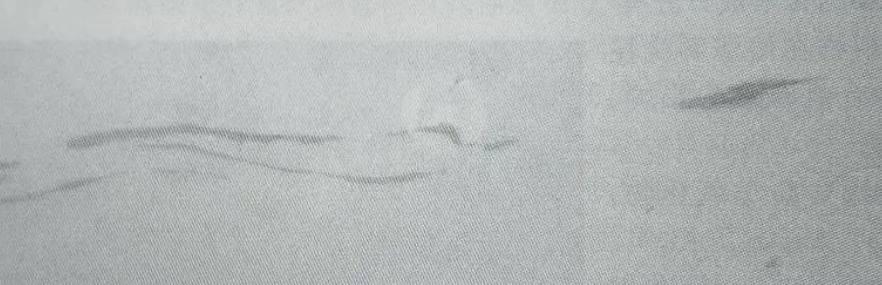 Figure4 Sulphides mixed 400X
2)Cracky, groceries.
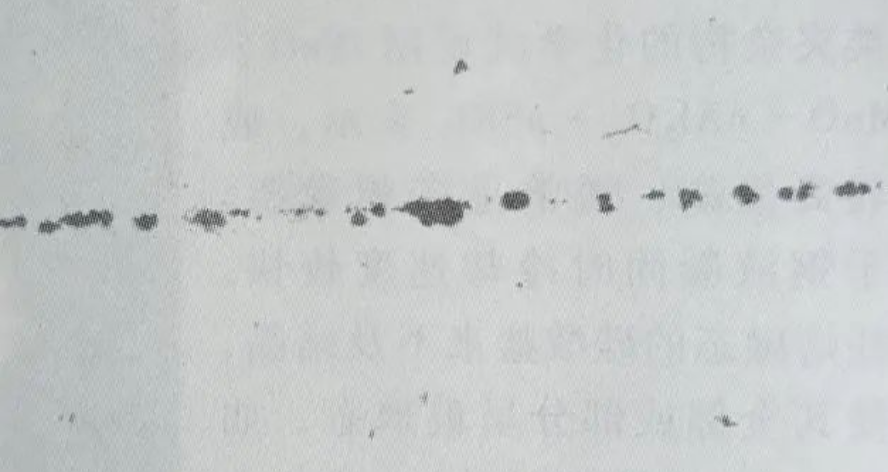 Figure5 serials of miscellaneous goods 100X
Cracked stenchs are unchanging during pressure processing, but break into a string along the direction of the process, e.g.Al2O3They are high melting points, high hard-harder pellets, like graphs.5as indicated.
3)Semi-plastic, groceries.
Semi-plastic silolate or calcium aluminum are the subject of plasticsable silicate or calcium aluminum, and mix a certain amount of accelerant oxide.
4Spherical (or dot-like) non-changed-formed-combustled 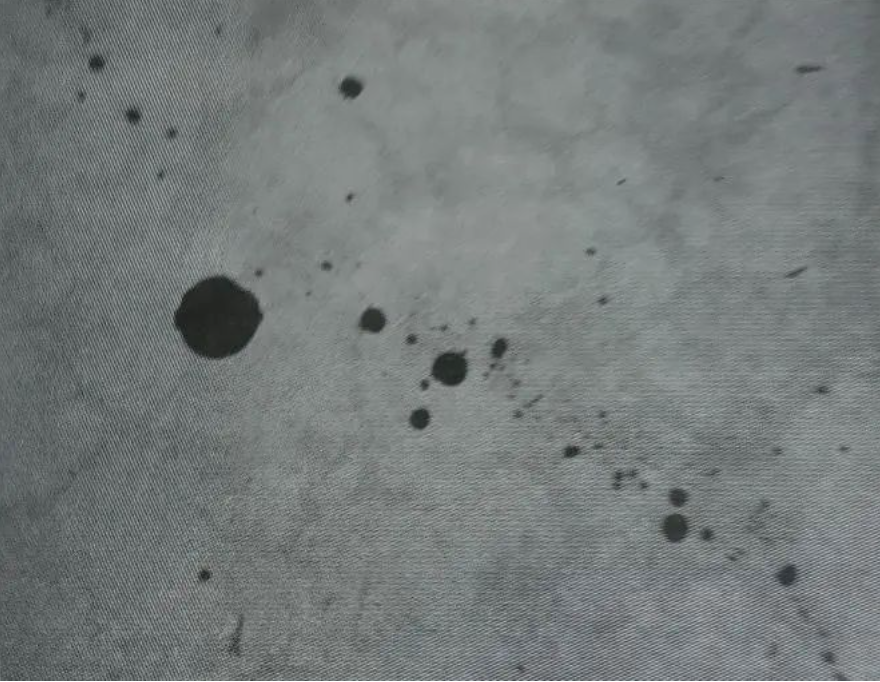 Figure6 Sphere or dot-like unchanging bags of miscellaneous goods100X
These are the types of things that are in the heat.SiO2andSiO2Higher (mass score greater than70%silicates,CaOAnd their integrationAl2O3The after-effects.CaO·Al2O3andCaO·2Al2O3Wait, as in the chart.6as indicated.
5Non-metal Mixer Test
ButtonableGB/T 10561The Standard Rating Chart Micro-test of the Measurement of Metals in Steel and Central Africa.
 Official hotline:021-61905265


 Published:2023-02-02
 Views:
 Source: