In the field of material microanalysis, the initial process of gold-phased samples - cutting - often determines the accuracy of follow-up observations.GB/T 13298-2015 Metal Microorganization Test Method explicitly provides that cutting is done in such a way as to prevent overheating, deformation of specimens and to avoid organizational changeHowever, in the traditional cutting process, metal specimens often produce burns, mechanical deformations, and even the loss of the edges of the samples, the reversal of the angles, etc., which directly leads to the distortion of micro-organism.
An engineer at the Axe Steel Laboratory complained to me: “The same GCr15 materials, manual cut and machine cut, and the crystal particle rating is two levels different.” This is not an isolated phenomenon.
How to ensure the efficiency of cutting while avoiding damage to the original tissue of materials, as a common demand of laboratories in the industrial manufacturing fields of steel, car parts, space and microelectronics.
The three “technical challenges” of the cutting process
The metallic and material cut is subject to three general technical difficulties:
Hot burn risk: The high temperature of the instantaneous sand-wheeling and scrambling of the specimens makes it very easy to change the microstructure of the metal surface. Studies show that when cutting temperatures exceed material-specific changes (e.g., 723°C co-conforming transformation temperature of steel material), the surface tissue will undergo irreversible changes, which will directly affect the accuracy of the μs interpretation.GB/T 13298-2015The first steps in the preparation of the sample of cutting are clearly required to avoid organizational change.
Mechanical damage layerThis problem is particularly acute in the scenes of steel material analysis, axle steel tissue testing, and hard alloy slices. Once tissue damage is introduced during the cutting phase, it is difficult to completely eliminate subsequent, even through fine grinding – often the remaining depth of the deformation layer is “covered” rather than “discovered” in the subsequent sample, leading to a deviation from the true value of the gold-phase rating.
Precision control problemSmall or sensitive materials are broken or edged to the point of loss when they are operated manually. Especially for hard-cut materials such as ceramics, hard alloys, traditional manual cutting can be as high as 15-30%.
II. A hierarchical solution: from conventional sampling to smart pulse cutting
In response to the above-mentioned demand for differentiation, Fuyun Testing Technology (Shanghai) Co., Ltd. has built a cut product matrix covering four-layer applications.
Level I: efficient sampling of conventional metal materials
Apply sceneAxes, block sample batch cutting
The FuyunFY-QG-65 gold cutting machine is configured with a three-phase four-power large power power power, with a main axle velocity of 2800 turns/minutes, and is accompanied by 250 x 2 x 32 mm sand-crays, which can achieve 80 mm of flat cutting in diameter. Its important advantage is that the power-stabilization output from the Y2-100I-2 3.0 KW power drive can be controlled in the actual condition of the mechanical damage layer of the ordinary carbon steel cut face≤20μm, meets most regular gold-phase testing requirements.
Level 2: Microsteps of fragile and sophisticated materials to
Apply scene: Responsive sensitive materials such as thin, ceramics and PCB microslices
FuyunFY-QG-30JM hands-on cum-creasing machine achieved a critical technological breakthrough: the speed of the cut-off is automatically retrenchable in 1-36 mm/min, and the rate of the cut-off is not as high as the one-way cut-off.Reconciliation steps are as accurate as 0.1 mm/min. This precision means that the velocities can drop from 20% to 20% of the hand-cut to a .5 mm ceramic base plate, with a steady velocity of the velocity of the velocity of the trajectories at 2-3 mm/min.Less than 3 per cent。
The equipment supports manual/automatic switching, with 5.7 inches of touch screen full digital control. Cut platforms 245 x 415 mm, T-type slots and fast-tracking systems can be adapted to various alien specimens.
Level 3: Safety procedure cutting for large and medium-sized samples
Apply sceneLarge-sized casting steel, exercise, axle bearings
FY-QG-80SZ automatic gold cutter with 350 x 2.5 x 32 mm sand wheeled, with a cutting capacity of 80 mm.125mm autocut mobile processA combination of the moving distance from the 275 mm workstation allows for the continuous completion of multi-layered slices.
2.2 KW electrics work in concert with safe and ground systems to prevent tissue damage during hypercircle. The data from the field show that when the equipment is used to cut the steel bearings GCr15 rods (50 mm diameter),2 mm/min at velocity, cut face damage stable at 10 m,FulfilledGB/T 6394-2017 Metallic Average Crystal Particle Measurement MethodPrecision requirements for sample preparation.
Level 4: Multi-modular smart pulse cut
Apply scene• Multimaterial switching, hot-sensitization/high-hard materials (titron alloy, nickel-based alloy) at scientific institutions
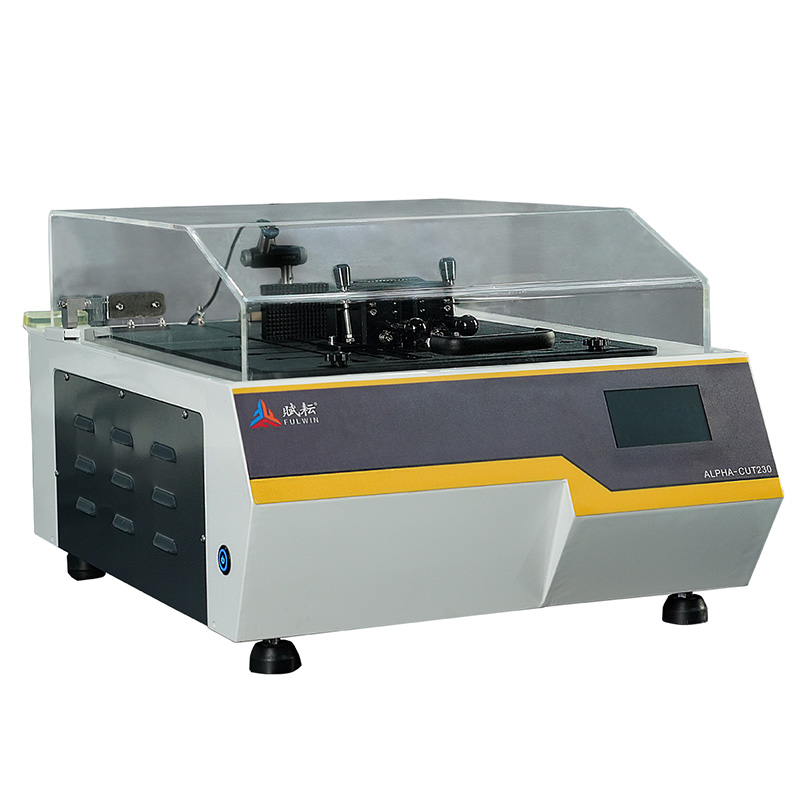
FuyunalPHA-CUT230 fully automated gold cutter is at the forefront of technology in this field.Automatic cutting of lines and pulses, manual multi-modulesThe rate of cutting is...0.01-5mm/sThe main axle is moving at a precise calibration within the range.0-50000rpm ungraded velocity。
The key value of this smart pulse cutting is that, by cyclicalally cutting-back mode of action, cutting areas are given a dispersing window period, and effective protection is given against ** the double-heat accumulation of sand-wheeled and specimens at a speed mode. Comparative tests of titanium alloy TC4 show that pulse-based cutting is more a constant pattern.Sand-ray losses were reduced by about 35 per cent and surface temperature of samples by over 60°C. The equipment is equipped with a high-power cooling cycle and compatibleWater, oil and emulsionThe multiple cutting fluids ensure that they are fully cooled under different cutting patterns.
The equipment is compatible with the more than 150 ~250 mm-size cut-off, 225 mm (200 mm cut-off time) on the workstation, 65 mm in the diameter (250 mm cut time time) and 750 W power configurations to ensure a stable operation over a long period of time.
III. Real cases: optimization of cutting programmes for the GCr15 crystal-particle rating of axle steel
Background
The operator's experience-controlled effort led to a high degree of tectonic fluctuations – 30 mg light, and over 50 m heavy – in the Cyclical Crystals of Austronics, which directly affected the accurate rating of the crystallity of the Austronics, with the laboratory's crystallity detection re-checking rate standing at around 25% for a long time and causing client complaints on several occasions because of inconsistent ratings.
Programme
The laboratory introduced FuyunFY-QG-80SZ automatic gold cutter, the key set-up being as follows:
•Cutting tablets: 350 mm diamond cut slices
•Inward speed: 2 mm/min (procedure locking, elimination of human error)
•Cut mode: Full auto-to-control, step-by-step cutting
Result
•Cutting the damage layer is stable.≤10μm(Shrink more than 70 per cent more manually)
•After further grinding, micro-organism is restored to its level.Over 95 per cent
•The one-time pass rate for crystal particle size has increased from 75% to97%
•We're down from 25% to recheck.Less than 3 per cent
Standard conformity
The program is fully satisfiedGB/T 6394-2017 Metallic Average Crystal Particle Measurement MethodRequirements for sample preparation, while meetingISO 643:2024《Steels - Micrographic determination of the apparent grain size》The programme is now included in the standard QMS operating procedures of the laboratory.
Systemized consumption material mix: “no water shrunk” for equipment performance
The main thing that cuts is that they cut the equipment.Gold cut., which is selected fromThe type of grinder, the size, the internal diameter matchThree dimensions are accurately matched.
(i) Overview of cutter parameters
| FY-QG-65 | FY-QG-30JM | FY-QG-80SZ | ALPHA-CUT230 |
| Main axis turn speed | 2800r/min | 500-3000r/min | — | 0-50000rpm ungraded velocity |
| Electric Power | 3.0KW | — | 2.2KW | 750W |
| Effective cutting in diameter | φ80mm | φ30mm | 80mm | 65mm (with 250mm cut) |
| Cut Platform Size | — | 245×415mm | 310×280mm | — |
| Autocut Process | — | — | 125mm | 225 mm (with 200 mm cut) |
| Workstation Move Distance | — | — | 275mm | — |
| Into speed adjustment | — | 1-36 mm/min (0.1 mm/min step) | All Automatic | 0.01-5mm/s |
| Cut Mode | Manual | Manual/Auto Switch | All Automatic | Line/pulse/manual multi-module |
| Control Mode | — | 5.7 inches touch screen | — | — |
| Recommended cut-off exterior | φ250mm | φ180mm | φ350mm | φ150~φ250mm |
| Main axis inner diameter specification | 32mm | 22mm | 32mm | 22mm/32mm |
(ii) Guidance on grinding and selection
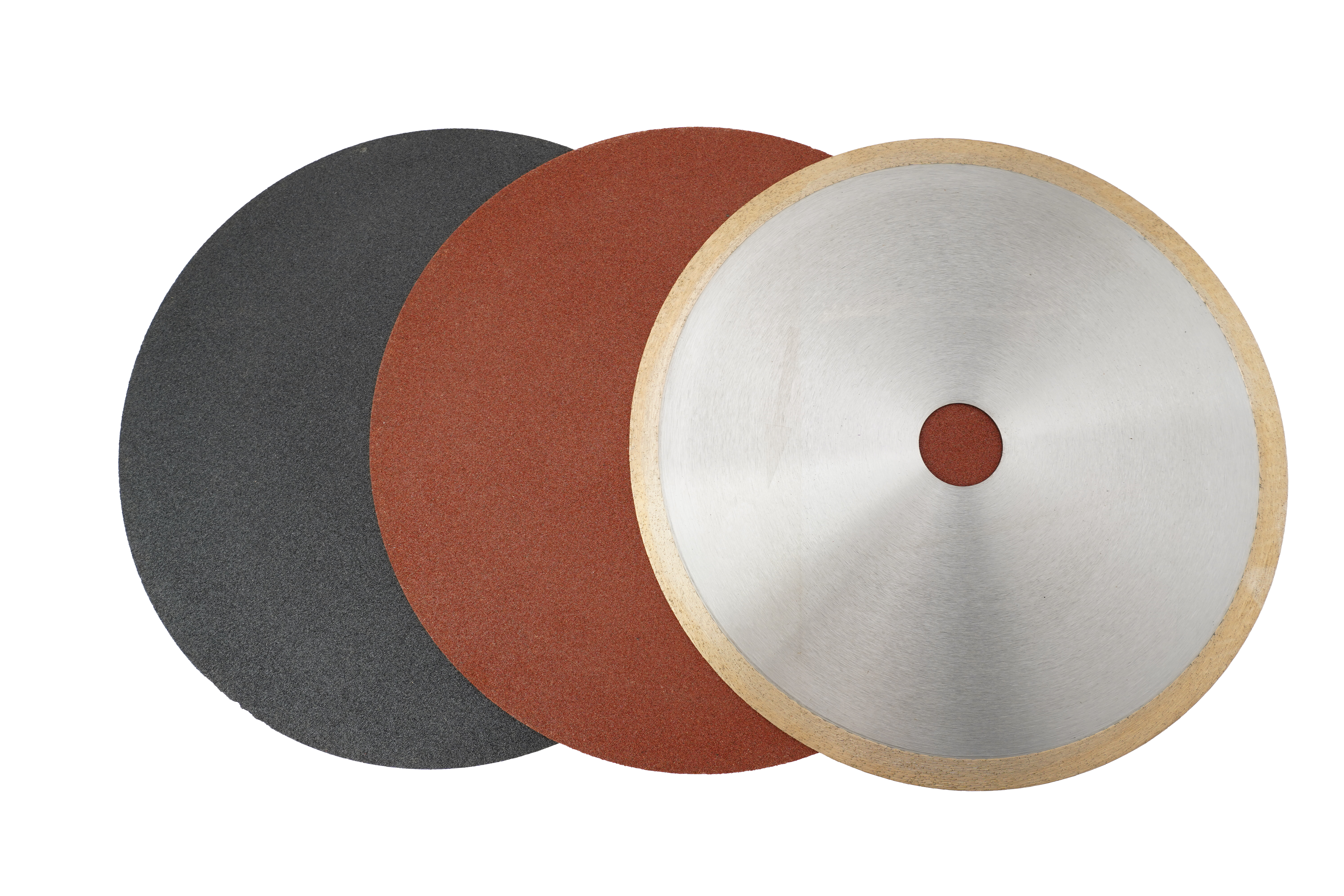
The gold-creeding tablets are divided into three main categories, depending on the type of grinding material:
•Aluminium oxide (Golden Jade) cut-offFuyunLWA series provides a range of specifications of Φ100 Φ400 mm, an inner diameter 12.7 mm/32mm and a thickness of 0.3-4mm.
•Silicon carbide cuttersFuyun provides a range of specifications of 250 ~ 400 mm for external diameter, 32 mm for inner diameter and 1.5-3.0 mm for thickness.
•Diamond cutters.The FuyunRDCW/MDCW series provides specifications of exterior diameter ~100 ~ 300 mm, inner diameter ~ 12.7 mm/22 mm/32mm, thickness = 0.3-1.5 mm.
(iii) Full cut-off tablet specifications
1. Aluminium oxide (Golden) cut-off (LWA series)
| Type of product | Product Model | Specific size (diameter/heavy/intrameter) | Packaging units | Units |
| Low-soft. | LWA150 | Φ150×1.2×12.8mm | 25 pieces/boxes | Snippets |
| Low-soft. | LWA180 | Φ180×0.8×12.7mm | 25 pieces/boxes | Snippets |
| Low-soft. | LWA180 | Φ180×2.0×22mm | 25 pieces/boxes | Snippets |
| Low-soft. | LWA200 | Φ200×0.8×22mm | 25 pieces/boxes | Snippets |
| Low-soft. | LWA200 | Φ200×1.0×22mm | 25 pieces/boxes | Snippets |
| Low-soft. | LWA200 | Φ200×0.8×32mm | 25 pieces/boxes | Snippets |
| Low-soft. | LWA200 | Φ200×1.0×32mm | 25 pieces/boxes | Snippets |
| Low-soft. | LWA230 | Φ230×1.2×32mm | 25 pieces/boxes | Snippets |
| Low-soft. | LWA250 | Φ250×1.5×32mm | 25 pieces/boxes | Snippets |
| Low-soft. | LWA250 | Φ250×2.0×32mm | 25 pieces/boxes | Snippets |
| Low-soft. | LWA300 | Φ300×1.5×32mm | 25 pieces/boxes | Snippets |
| Low-soft. | LWA300 | Φ300×2.0×32mm | 25 pieces/boxes | Snippets |
| Low-soft. | LWA350 | Φ350×2.5×32mm | 10 pieces/boxes | Snippets |
| Low-soft. | LWA400 | Φ400×3.0×32mm | 10 pieces/boxes | Snippets |
| Low-soft. | LWA450 | Φ450×3.5×32mm | 10 pieces/boxes | Snippets |
| Low-soft. | LWA500 | Φ500×4.0×32mm | 10 pieces/boxes | Snippets |
Silicon carbide cutters(HWA series)
| Type of product | Product Model | Specific size (diameter/heavy/intrameter) | Packaging units | Units |
| High Hardbus. | HWA150 | Φ150×0.5×12.7mm | 25 pieces/boxes | Snippets |
| High Hardbus. | HWA180 | Φ180×0.8×12.7mm | 25 pieces/boxes | Snippets |
| High Hardbus. | HWA180 | Φ180×0.8×22mm | 25 pieces/boxes | Snippets |
| High Hardbus. | HWA200 | Φ200×0.8×22mm | 25 pieces/boxes | Snippets |
| High Hardbus. | HWA200 | Φ200×1.0×22mm | 25 pieces/boxes | Snippets |
| High Hardbus. | HWA200 | Φ200×0.8×32mm | 25 pieces/boxes | Snippets |
| High Hardbus. | HWA200 | Φ200×1.0×32mm | 25 pieces/boxes | Snippets |
| High Hardbus. | HWA230 | Φ230×1.2×32mm | 25 pieces/boxes | Snippets |
| High Hardbus. | HWA250 | Φ250×1.5×32mm | 25 pieces/boxes | Snippets |
| High Hardbus. | HWA250 | Φ250×2.0×32mm | 25 pieces/boxes | Snippets |
| High Hardbus. | HWA300 | Φ300×1.5×32mm | 25 pieces/boxes | Snippets |
| High Hardbus. | HWA300 | Φ300×2.0×32mm | 25 pieces/boxes | Snippets |
| High Hardbus. | HWA350 | Φ350×2.5×32mm | 10 pieces/boxes | Snippets |
| High Hardbus. | HWA400 | Φ400×3.0×32mm | 10 pieces/boxes | Snippets |
| High Hardbus. | HWA450 | Φ450×3.5×32mm | 10 pieces/boxes | Snippets |
| High Hardbus. | HWA500 | Φ500×4.0×32mm | 10 pieces/boxes | Snippets |
Silicon carbide cutters(HSA Series)
| Type of product | Product Model | Specific size (diameter/heavy/intrameter) | Packaging units | Units |
| Super Hardbus. | HSA200 | Φ200×1.0×32mm | 25 pieces/boxes | Snippets |
| Super Hardbus. | HSA230 | Φ230×1.2×32mm | 25 pieces/boxes | Snippets |
| Super Hardbus. | HSA250 | Φ250×1.5×32mm | 25 pieces/boxes | Snippets |
| Super Hardbus. | HSA250 | Φ250×2.0×32mm | 25 pieces/boxes | Snippets |
| Super Hardbus. | HSA300 | Φ300×1.5×32mm | 25 pieces/boxes | Snippets |
| Super Hardbus. | HSA300 | Φ300×2.0×32mm | 25 pieces/boxes | Snippets |
| Super Hardbus. | HSA350 | Φ350×2.5×32mm | 10 pieces/boxes | Snippets |
| Super Hardbus. | HSA400 | Φ400×3.0×32mm | 10 pieces/boxes | Snippets |
| Super Hardbus. | HSA450 | Φ450×3.5×32mm | 10 pieces/boxes | Snippets |
| Super Hardbus. | HSA500 | Φ500×4.0×32mm | 10 pieces/boxes | Snippets |
| Super Hardbus. | HSAA400 | Φ400×3.0×32mm | 10 pieces/boxes | Snippets |
3. Diamond Cutting Cards (MDCW Series)
| Type of product | Product Model | Specific size (diameter/heavy/intrameter) | Packaging units | Units |
| Metal-cracker cut. | MDCW 100 | Φ100×0.3×12.7mm | 1 piece/box | Snippets |
| Metal-cracker cut. | MDCW 125 | Φ125×0.4×12.7mm | 1 piece/box | Snippets |
| Metal-cracker cut. | MDCW 150 | Φ150×0.5×12.7mm | 1 piece/box | Snippets |
| Metal-cracker cut. | MDCW 175 | Φ175×0.6×12.7mm | 1 piece/box | Snippets |
| Metal-cracker cut. | MDCW200 | Φ200×0.8×22mm | 1 piece/box | Snippets |
| Metal-cracker cut. | MDCW 250 | Φ254×1.2×32mm | 1 piece/box | Snippets |
| Metal-cracker cut. | MDCW 300 | Φ305×1.5×32mm | 1 piece/box | Snippets |
Diamond Cutting Cards (RDCW Series)
| Type of product | Product Model | Specific size (diameter/heavy/intrameter) | Packaging units | Units |
| Cheap-cracker. | RDCW 100 | Φ100×0.5×12.7mm | 1 piece/box | Snippets |
| Cheap-cracker. | RDCW 125 | Φ125×0.6×12.7mm | 1 piece/box | Snippets |
| Cheap-cracker. | RDCW 150 | Φ150×0.7×12.7mm | 1 piece/box | Snippets |
| Cheap-cracker. | RDCW 175 | Φ175×0.8×12.7mm | 1 piece/box | Snippets |
| Cheap-cracker. | RDCW200 | Φ200×1.0×22mm | 1 piece/box | Snippets |
| Cheap-cracker. | RDCW 250 | Φ254×1.2×32mm | 1 piece/box | Snippets |
| Cheap-cracker. | RDCW 300 | Φ305×1.5×32mm | 1 piece/box | Snippets |
Notes: The diamond cut-off slicesPlutonium binding agent(befitting to be well circumcised, narrow and high surface quality) andMetal screechTwo categories (suitable for rough processing, long life). The 0.3 mm thickness specification applies to ultra-shrimp and close cutting, narrow cutting and high material utilization.
1.Titanium alloy cut-off (TCW series)
| Type of product | Product Model | Specific size (diameter/heavy/intrameter) | Packaging units | Units |
| Titanium alloy cut. | TCW250 | 250×1.5×32mm | 10 pieces/boxes | Snippets |
| Titanium alloy cut. | TCW300 | 300×1.5×32mm | 10 pieces/boxes | Snippets |
| Titanium alloy cut. | TCW300 | 300×2.0×32mm | 10 pieces/boxes | Snippets |
| Titanium alloy cut. | TCW300W | 300×1.5×32mm | 10 pieces/boxes | Snippets |
| Titanium alloy cut. | TCW350 | 350×2.0×32mm | 10 pieces/boxes | Snippets |
(iv) Cutting fluids: neglected “third-stoms”
1.The main effect of cutting fluids.
Cutting fluids are not simple “water”, but are key to ensuring the quality and efficiency of cutting. Their main roles include:
◦Cool: Fast removal of cutting heat to prevent tissue changes in samples due to overheating (e.g., gillfire, fire back), while protecting the cut wheel.
◦Lubrication(c) Cultivation of lubrication membranes between cut wheels and samples, reduced friction, and increased cut accuracy and surface light.
◦Scrap and Purge: timely flushing of the scraps generated by the cutting and avoidance of secondary wear and tear cuts to the cut surface.
◦Rusty protection: formation of protective film on the surface of the material to prevent the rust of the metal material during the cutting.
•Classification and selection of cutting fluids
Several common cutting fluid types and their application scenarios can be presented on the basis of different materials:
◦Water-based cooling fluids: Good cooling, low cost, environmentally friendly, for cutting non-ferrous metals such as aluminium, copper and common steel.
◦Oil-based cooling fluids(b) Lubrication and rustproofness are excellent and are applied to cutting of high hard, high-intensity alloy steel and hard-to-process materials.
◦Erosion.(b) The advantages of having both a water and oil-based component, cooling and lubrication performance can be controlled by adjusting matching, and are applicable to general cutting of a variety of materials.
•Use and maintenance of cutting fluids
◦Match: Most of the cutting fluids sold are concentrated, and a percentage is required (e.g.,1:10 to 1:25) after diluting with water.
◦Replacement: recommended for periodic replacement, e.g.Replacements per month- To ensure that their performance is stable.
◦Select Type: Reasonable selection based on the physical characteristics of the sample material to be cut
(v) Intra-cipher specifications and equipment compatibility
The inside of the gold cut-off is mainly the one that's going to be12.7mm、22mm、32mmThree standard specifications:
•32mm: IM specification for main gold cutter, FY-QG-65 and FY-QG-80SZ
•22mm: Precision machine type FY-QG-30JM
•12.7mm: For small, closely circumcised machines and some imported equipment
The selection of the type will ensure that the cut-off internal diameter is accurately matched with the main axle of the device, which would otherwise lead to a unstable installation, a reduced cut accuracy and even a safety accident.
(vi) A complete match of cutting chips with equipment
| Adaptive type | Recommended cut-off exterior | Inner diameter | Recommended grinder type |
| FY-QG-65 Golden-Cutter | Φ250 | 32mm | Aluminium oxide (conventional metals) / Silicon carbide (ferrous metals) |
| FY-QG-30JM Scrubber | Φ180 | 22mm | Diamonds (hard-crystal materials) |
| FY-QG-80SZ automatic gold cutter | Φ350 | 32mm | Aluminium oxide (conventional) / Silicon carbide (coloured) |
| ALPHA-CUT230 Full autocutters | Φ150~Φ250 | 22mm / 32mm | Full series fit. |
(vii) Selective decision logic
The cut-off selection follows the following three-step logic:
1.Pick the grinder by the materialConventional ferrous metal aluminum oxide; non-ferrous metal accelerated silicon carbide; hard-crystal (porcelain, glass, PCB, hard-quality alloy) acrystal.
2.Select IR by Device: Confirm the main axle specification of the equipment and select the inner diameter of 12.7 mm, 22 mm or 32 mm.
3.Select the external diameter and thickness by sampleLarge-sized specimens select large external diameters (300300Φ400); fine/spinted samples select small external diameters (Φ100Φ180) and thin thickness (0.3-0.8mm).
Fuyun testing provides a full series of cutting chips that match the various models perfectly and recommends appropriate cutlets specifications based on the type of material, hardness and equipment type of the client.
V. Technological qualifications and industry accumulation
Fuyun test passed.ISO 9001 Quality Management System (QMS) certification, has multiple gold-comparable hardnessTechnical resultsThe company’s products are designed and validated in strict accordance with the following national standards:
| Standard number | Standard name | Link to the cutting process |
| GB/T 13298-2015 | Metallic microorganism test | Provide for the protection of specimens from overheating and deformation during cutting |
| GB/T 6394-2017 | Metallic mean crystal particle measurement method | Request for precision in the preparation of a crystal particle rating sample |
| GB/T 226-2015 | Low-multiple tissue and defective acid corrosion tests for steel | Establish a test-formulation requirement for low-frequency tissue testing |
| GB/T 1979-2001 | Rating of structural steel for low-level organizational defects | Provides for the evaluation of structural steel for low-multiple tissue defects |
| GB/T 5168-2020 | TNT high and low tissue test method | Requirements for the preparation of samples for titanium alloy inspection |
| GB/T 2975-2018 | Sample location and sample preparation for the mechanical performance test of steel and steel products | Requirements for sampling and preparation of mechanical test samples |
| ISO 643:2024 | Steels - Micrographic determination of the apparent grain size | International crystal particle scale |
The core team members have been working on a laboratory instrument package for 10-15 years, with full chain service from non-standard-tailored to door-to-door calibration.
In terms of industry endorsement, Fuyun testing is a permanent sponsor and partner of the National College of University Students Kim-Chat (sponsored by the Qinghua, Tsang University and other universities) and has established technical cooperation relationships with international brands such as Gutha, Langplen, France, and Olympus.
VI. Selected decision-making comparisons
| Apply scene | Recommended aircraft type | Key Selection Basis | Expected cutting effect |
| Conventional metals (axis/block), bulk sampling | FY-QG-65 | 2800rpm steady output, larger cut 80mm | The damage layer is 20 meters. |
| Snippets/precision parts/fragilable materials | FY-QG-30JM | - Quicker, 0.1 mm/min step. | Collapse < 3%, equal stress. |
| Large-sized casting steel/work | FY-QG-80SZ | 125mm process, all automatic. | The damage layer is 10 m. |
| Scientific research/multimaterials/hot-sensitive hard materials | ALPHA-CUT230 | 0-50000rpm no-spacing + pulse mode | Temperature by 60°C+ and a 35% increase in the lifetime of sand-crayed blades |
VII. Quick-checking of common problems
Q1: What about the edge cracks when ceramic materials are cut?
The main cause of cracking in hard-cracked materials such as ceramics is the over-speed or inappropriate sand-wheel selection. It is recommended that the FP-QG-30JM be used to move the velocity of the inflow to 2-3mm/min to the same level as the diamond cut.Over 98 per cent。
Q2: What's the reason for the blacking of the face after the gold-created?
Blacking usually results from oxidizing burns caused by high cutting temperatures. First, check whether the sand-wheel blades are passivated and then confirm that the rate of entry is too fast.
Q3: Is there an alternative to the high cost of imported cut-off materials?
The main consumption of gold is gold-cutting. Import brands are market-driven by their technological accumulation, and the price of their products is usually 30-50% higher than that of their own products.The combined cost of single cutting is about 40 per cent lower than the cost of imported brandsImport substitution certification has been completed in several third-party testing institutions.
Take FuyunFY250SJ, for example, 20 per box.The combined cost of single-piece use is 60-80 per cent of the imported product onlyFuyun cut slices are made of high-intensity resins and selected special grindings.High cutting accuracy, light heat-impact layer, small deformation, durable sharpness, with a useful life of up to ordinary products2-3 times。
Q4: How do we determine whether the damage layer of the existing cutting process is satisfactory?
Simple validation methods are: to observe the cut face directly (without grinding) under the microscope. If you see a visible deforming current line or a microfiche, it is clear that the damage layer has exceeded the limit of the subsequent grinding to remove it.GB/T 13298-2015Standard requirements are that the cutting should prevent the specimen from overheating, deforming and that the depth of the damage should be controlled≤15μmIn-house access to follow-up sampling processes.
Q5: How do non-specified samples fix?
Fuyun tests provide a custom service for non-standard work-gap.Within 5 working daysDesign and delivery of the kit was completed. There are now fixed programmes covering over 30 non-target samples, such as tubes, thin sheets, or alien foundries.
Concluding remarks
Gold-creeding is the starting process for the material microanalysis, and its quality control directly determines the effectiveness of all subsequent sampling links.GB/T 13298-2015The first step in the preparation of the test is to make cutting the first step of the process.GB/T 6394-2017The precision of the preparation of the crystal particle rating test is clearly required — the common point of these criteria is:Cutting the face layer is within 10 m and is the first threshold for obtaining real micro-organism information.
Fuyun tests provide complete cutting solutions from conventional to precision, from hand to smart, through graded product design, precision parameter control and systematic consumption packages, for steel metallurgy, mechanical manufacturing, and materials research.
If you need advice on cutting parameters for your specific material type, you can contact the Fuyun Test Technical Team (021-61905265) for a sample test service.
 Official hotline:021-61905265


 Published:2026-07-03
 Views:
 Source: