In the industrial manufacturing field of steel, automobiles, aerospace, railways, electricity, etc., observations of materials micro-organism directly relate to the accuracy of quality determination and failure analysis. Metals and materials are prone to burns, deformations, sample edges, down-blown angles, bubbles, internal groceries, etc., in the process of cutting, mosaicing, grinding and slinging, which leads to the distortion of micro-organism; at the same time, there are safety hazards in the procurement and storage of dangerous chemicals such as bitter acid used in traditional erosion processes. These are common topics that are long-standing in the material detection industry.
The company’s business team has more than 10 years of industry experience in the field of laboratory equipment, and has established partnerships with brands such as Gutha, France, Lamplen, Orimbas, Germany, through ISO 9001 certification, with patents for gold-comparable inventions and participation in industry standard-setting.
Cutting: Scaled to cover different sampling needs
The EY-QG-30JM cutter is automatically tuned in 1 - 36 mm/min, and is adjusted to 0.1 mm/min, and is fully digitally displayed and controlled with 5.7 μt touch screens. The SY-QG-80SZ has a 125 mm automatic cut-off, which is more mobile at a distance from the 275 mm working table, and is suitable for automated burn-free cutting of large and medium-sized samples, in line with the secure in situ system.The desktop-level ALPHA-CUT2330 provides three models of straight, pulse and manual work, designed for hard-line materials such as ceramics, crystals, which reduce the cut-off stress and sample damage, cut at a precise velocity of 0.01-5 mm/s, and rotated the main axle at no velocity of 0-5,000rpm, with laser positioning, which is used to locate the cutting position of the core of the sample in a precise manner.
Embedded: Vacuum matches thermal pressure process landscape
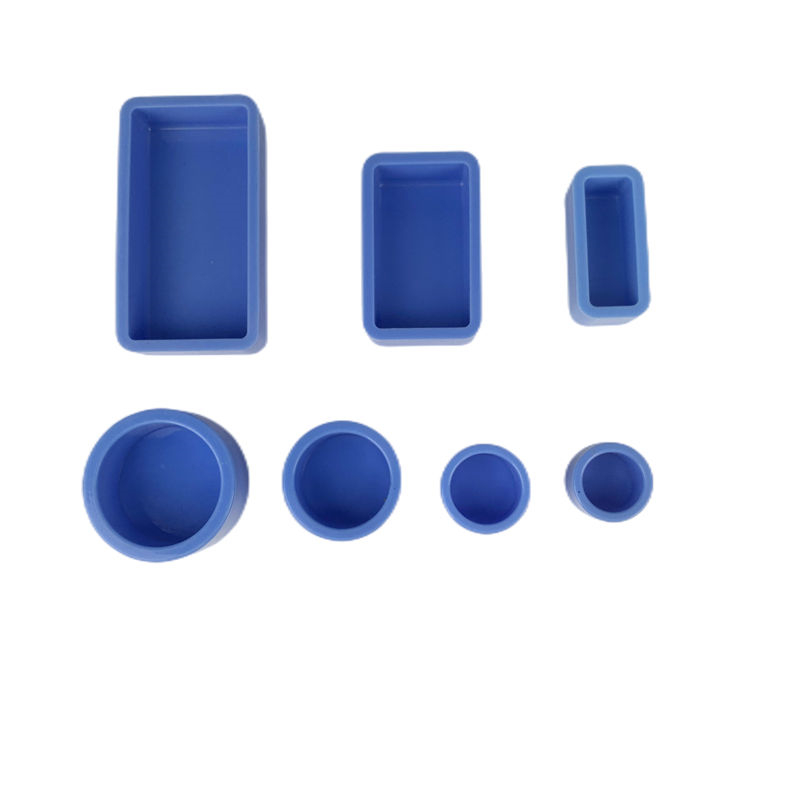
For the problem of pressure-resistant deformations under conventional heat pressure of pore, laxity or thermal sensitive materials, the vacuum mosaic FY-VM-II relies on -0.1Mpa to compare the large vacuum with the 7.2m3/h rate, making the resin fully comprehensible on the edge, and can accommodate at a time more than 10 samples of 30 mm diameter. The high touch screen fully-istorized FY-XQ-200 can exert a continuous and stable pressure of 50-350 bar, sequestered with a running water cooling, and compressing the single-formation sample time to 3-15min, compatible with 25 mm to 50 mm and 1 to 1.5 inches of more than a model.Thermal and cold-sinked resin series cover FHM1 commonly used, FHM2 conductor, FHM3 margin, FHM6 soluble and cold-sinked resin bB. The range is for mirror analysis, thin-plating margin, and no loss of sample, and reduces the risk of marginal reversals due to the differentials in grinding contraction rates.
Grinding: stress control and synergy with process control
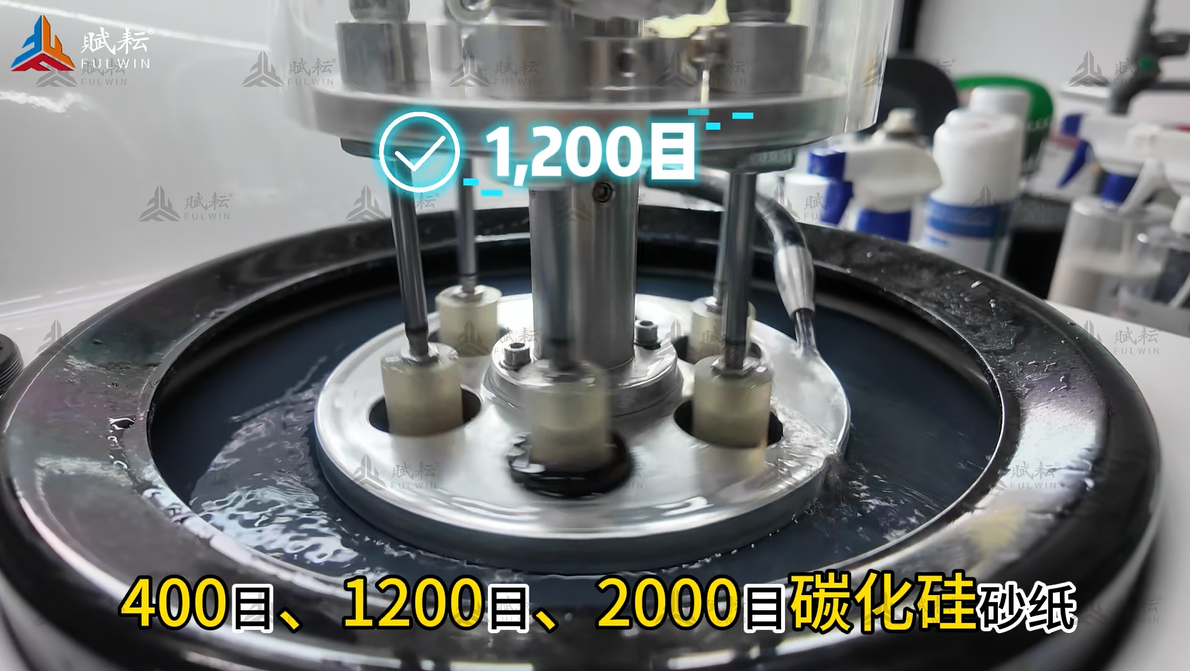
Full-automatic touch-screen gold-painting FY-MP-200, which uses single-point gas-pulsing, is finely adjusted within 5-65N to ensure that six samples are on the same plane at the same time as they are grinding, and the working disk speed is 100-1,000 r/min adjustable. Full-automatic double-gauge-pasters/electrically deciphers support multi-parameter storage, each of which can be 10 steps in sequence and automatically sequenced, and is fitted with a rigid structure of a Kw server and an electromagnetic automatic hold-lock, suitable for soft metals and deformable materials.The polishing series distinguishes between the glass spray agent for diamonds, the aluminum peroxide oscillator and the sili oxide silisol suspension plating fluid, which are suitable for hard materials such as gill-fired steel, titanium alloy and soft metals such as aluminium, copper, tin, lead, and so forth, to prevent the granules from embedding into the soft matrix.
Corrosion process: environmentally friendly reagent substitution
FSE/FSEP/FSEPS models are used for the display of austropic crystals for materials such as axle bearing steel (GCr15), seen carbon steel (20CrMnTI), molycing steel (42Crmo); FSM models are used for the organized erosion of solid stainless steel (e.g., 630, 17-4PH, 1Cr13) for the sedimentation of the mosaics; FSEAL, FSEMA, FSECA, FSETA are used for the direct tissue corrosion of aluminium, magnesium, copper and titanium, respectively.The low-sized tissue thermal acid corrosive device FY-MH-100 controls accuracy error within ± 1°C; the electrolytic polish corrosor EP-06/FY-EP-100 introduces 0-100 V/0-6A continuous straight current power, which is shown to be a non-mechanical tissue in conjunction with the magnetic mixing system, and reduces the interference of the shape-forming accelerosis or processing hardening layer with the determination.
Analysis and validation: micro-observation and hard gradient measurement
The Golden Microscope Series (FY-MMD-300/400/500) and the Body-Video Microscope FY-MMD-3TS are used to magnify the observation of aluminium, iron, aus, marzillus, bellows, seen carbon, etc., to identify the purity of the impurities of the oxidizers, sulphides, etc.; the Micro/Wigrade Hardometer Series is associated with the automated measurement system to determine the depth of thermal treatment of the industrial components by changes in the gradients of the surface and the substrate; the LoC/Blucometer series covers the numeric luminous, small-flush, touch screen and surface roC, and is symmetrical with different thickness and hardness.
In a comprehensive manner, the Fuyun tests have developed a system of products with parameters for specific pain points such as burns, deformations, bubbles, marginal damage and dangerous chemicals safety around cutting, mosaicing, grinding, corrosives, and analysis of the whole gold-phased process. They have been applied in industrial manufacturing areas such as steel, automobiles, aerospace, railways, electricity, and in teaching and research in institutions and institutes specializing in the field of the study of the study of the study of the production of materials and materials, reflecting the professional accumulation of Fuyun tests in the field of materials and microscopying techniques and in the development of equipment and development.
 Official hotline:021-61905265


 Published:2026-09-03
 Views:
 Source: