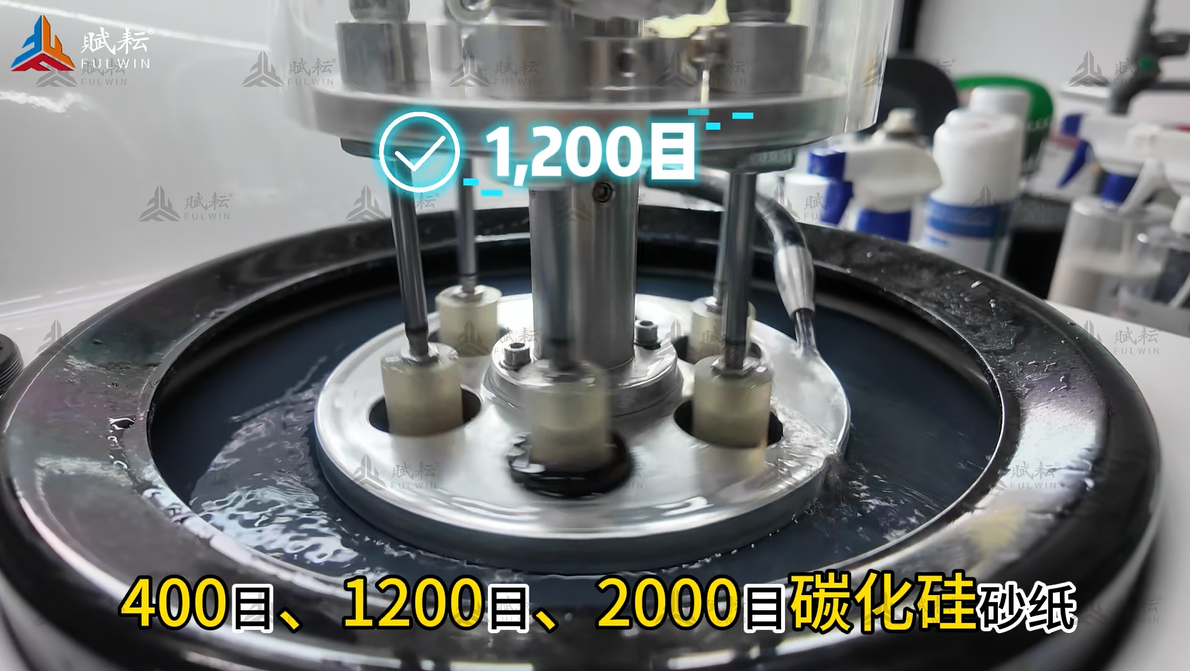
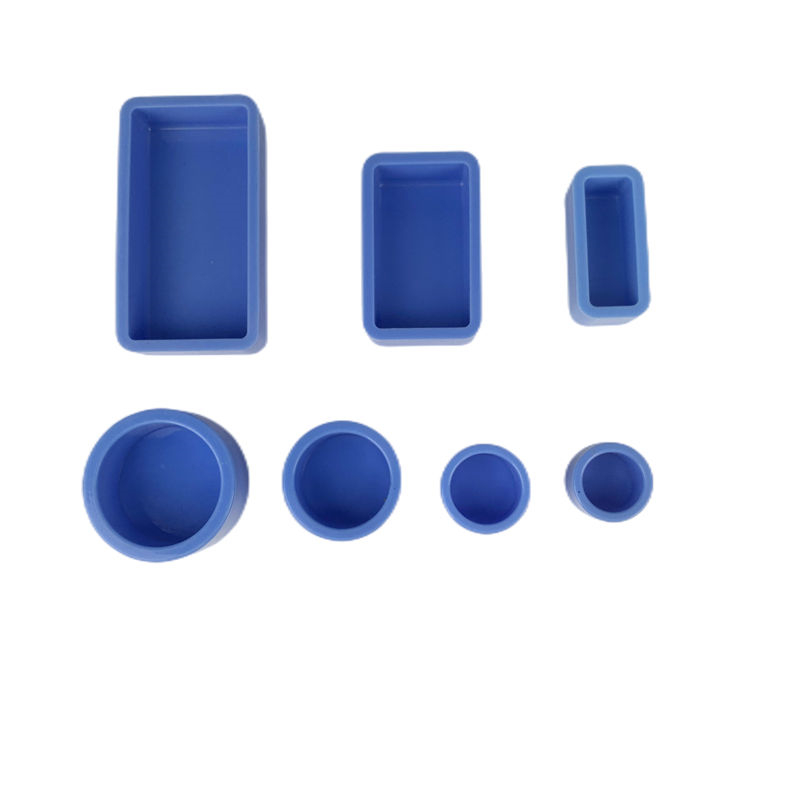
I. Introduction: The gold is the face of the world, why"Throw!"- Yes."Grid"More critical?
In materials science, metal quality testing, failure analysis, etc., the golden optic microscope is a micro-organisation of observation materials."Eyes."Whether the size of the crystal grain in the steel is in the form of the crystal line, the distribution of the second phase particles in the aluminium alloy, or the gas hole and crystal structure in the ceramics, the sample will need to be prepared as a mirror for the surface level, scratch and non-deformed layer to obtain a real and clear image under the microscope.
A perfect gold sample, usually passing through.The sampled twirl is coarse and corrosive.Seven steps. Many beginners tend to focus on grinding and corrosion, while ignoring the importance of polishing -- especially the value of the plume. In fact, the front-dove sandpaper grinding leaves a visible face on the surface of the specimen.Plastic deformation layerIt can be as thick as a few micrometers to a few dozen micrometres. If this layer of deformation is not completely removed, it's under the microscope."Organizations"It may be a distorted illusion, and the EBSD test is more likely to be a surface-resilient one that does not allow the exact chrysanthemum to be mapped.
The mission of the finest is to remove the layer of transformation in the most mild way, without introducing new scratches. In many of the finest materials,Aluminum oxide suspended plumeThis paper presents the above-mentioned SeaFuyun Testing Technologies.Fuyun OSP Aluminium Oxygen suspension photoplasm (1 μm 500ml)For a physical sample, give you a full picture of what's common in this lab."Mirror craftsman"。
II. Product appearance and packaging: A bottle of 500 ml for the interpretation of the details of the aluminium oxide suspension
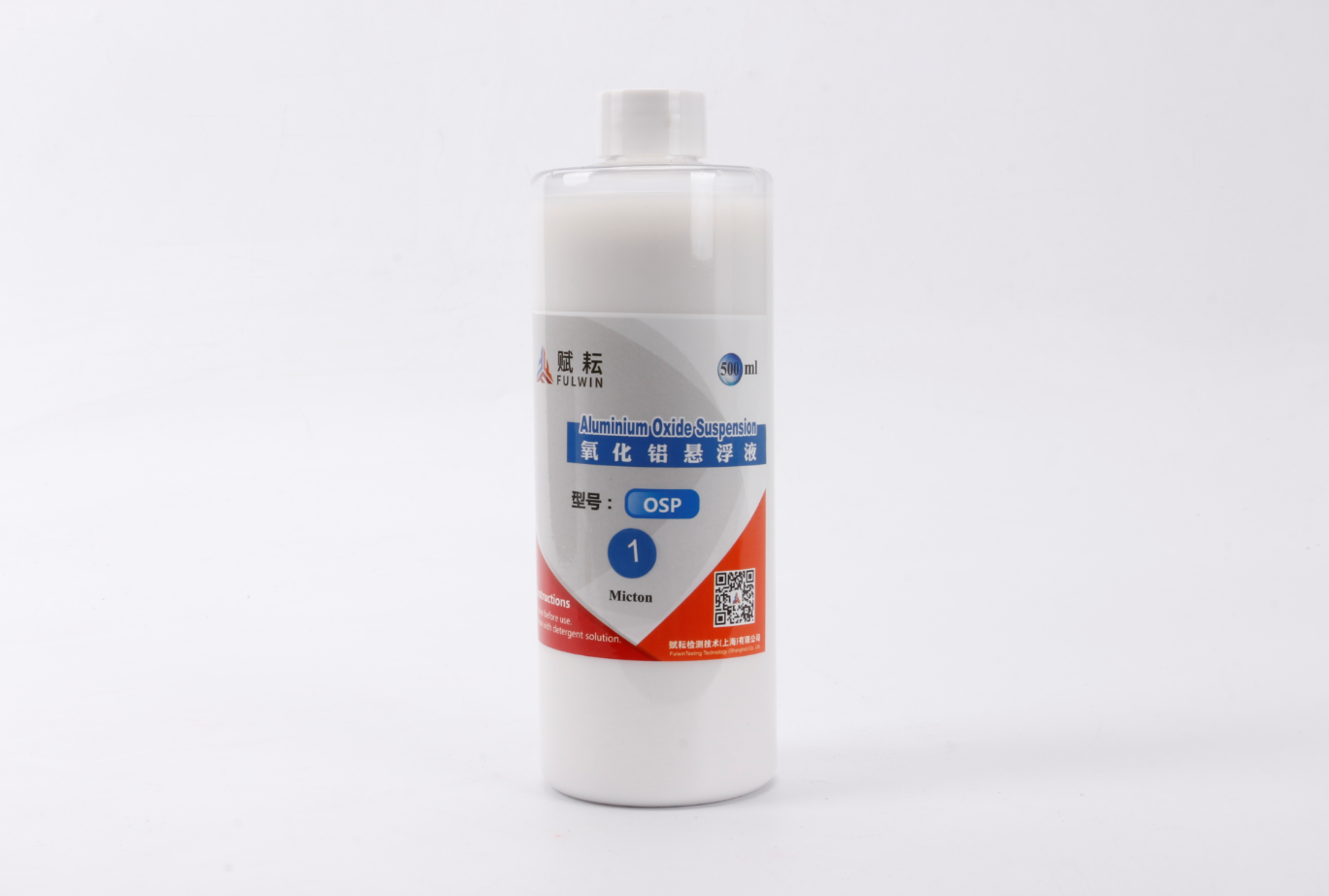
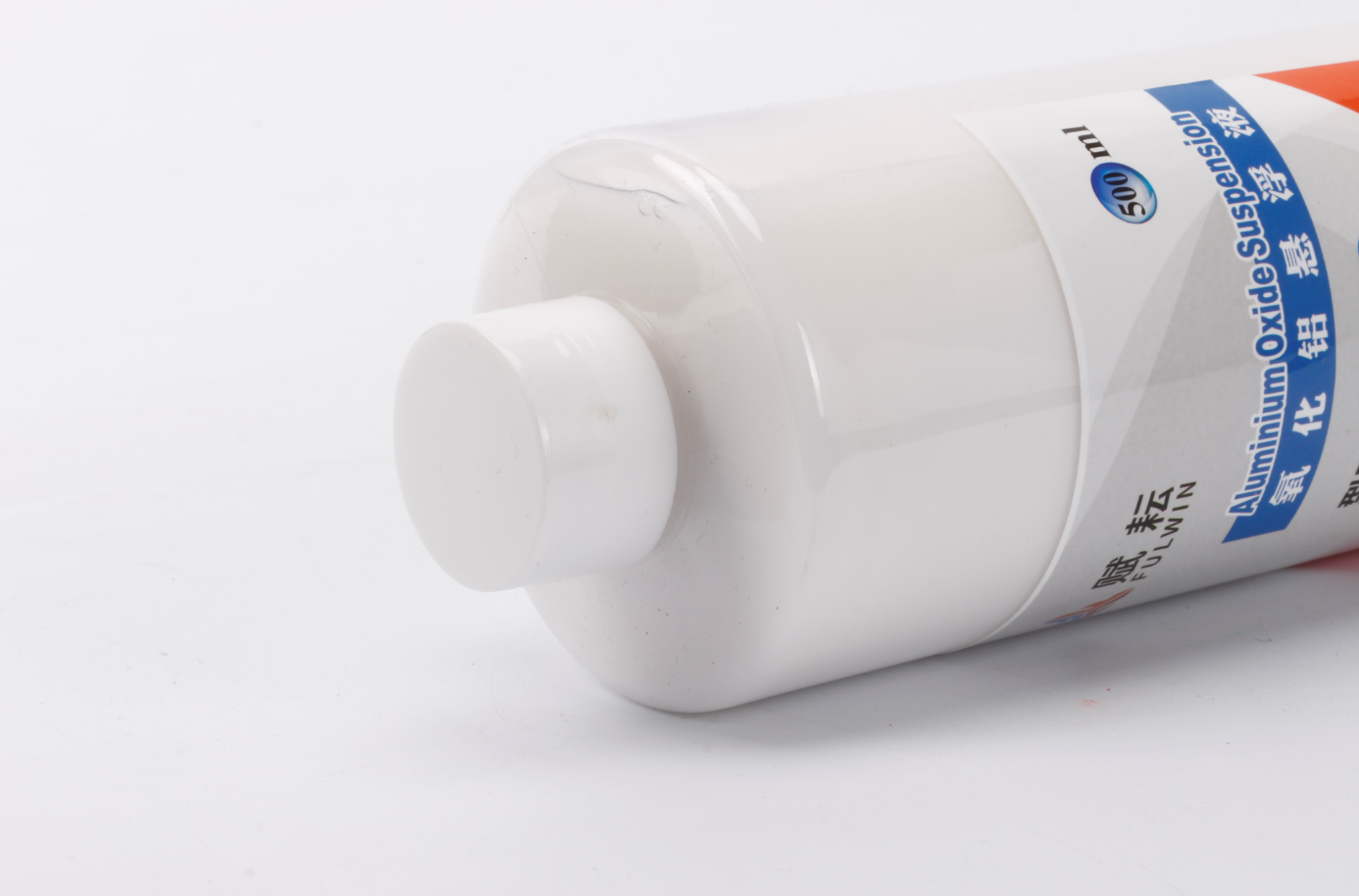
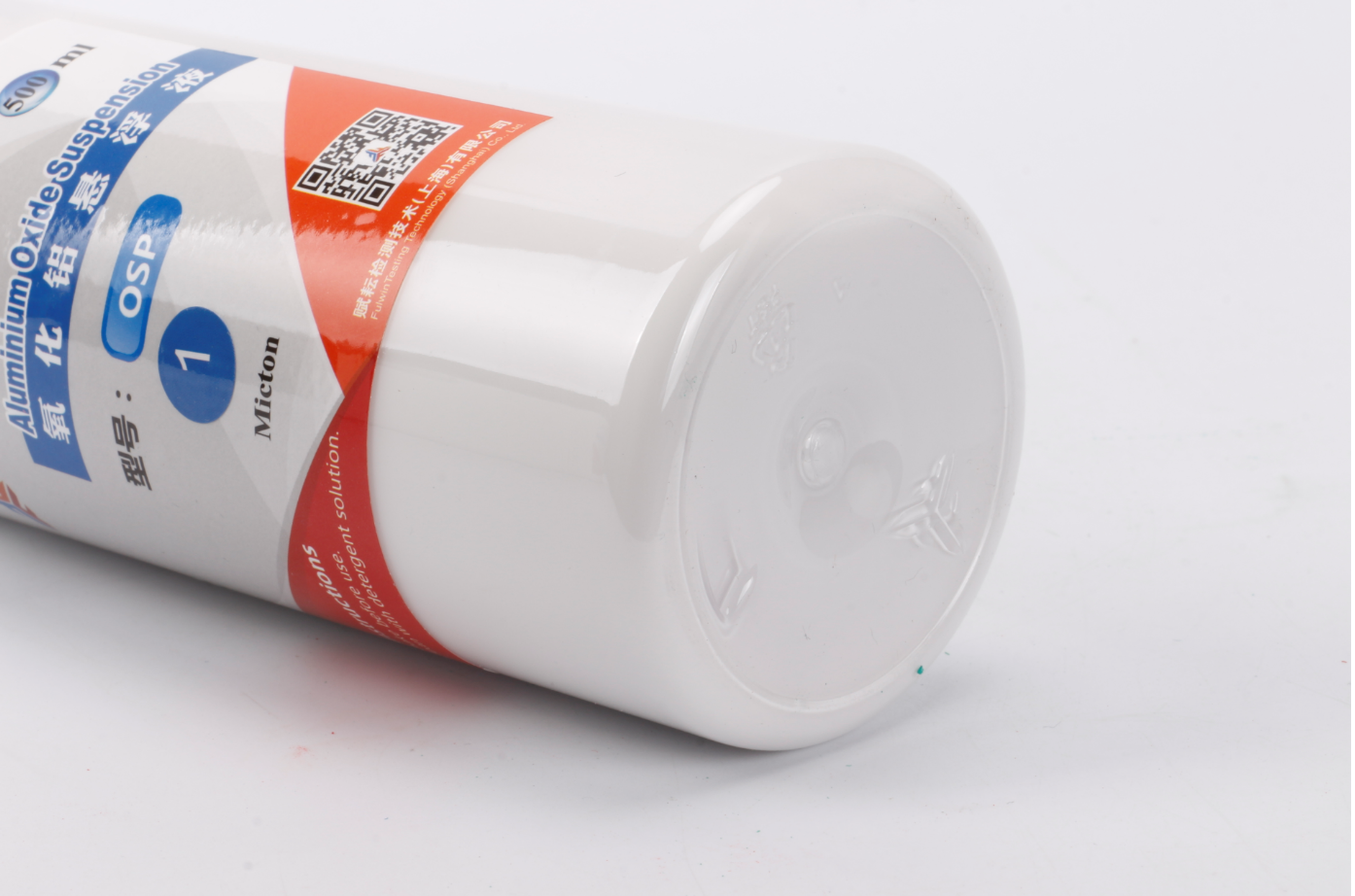
Got a bottle of Fuyun OSP Aluminium Oxygen suspension, first one of the eyes.Cylinder Transparent Plastic BottleThe bottle is round and the line is simple. The bottle is filled withMilky white, non-transparent liquidThis is the typical appearance of the aluminum oxide micro-particle being evenly distributed in the water-based medium - the more evenly the liquid is milked, the better the particle is dispersed; if a visible layer or bottom sediment mass is present, the indication of a stable suspension system needs to be sufficiently smoothed and reused.
Bottles and caps:The bottles use transparent polypropylene (PP) materials, and the bottle base emulator is marked with a triangle recovery mark (introduced number)"5", or PP material code, with good chemical stability and resilience, suitable for long-term storage of water-based polish. The bottlecap isWhite vertebraeThe bottle is designed to be low-speed, liquid flow is controlled and is not easily splattered.
Label design:The bottle label is designed to be split by a slant of silver ash and red, with clear information:
- Top LeftFor Fuyun brand brand - Red blue-colored triangle Logo, bottom label"Fuyun FULWIN"Bilingual brand name of Central-British;
- Top RightA blue ellipse adjective identifier, label"500 ml";
- Mid-Blue BarProduct name area, above English"Aluminium Oxide Suspension"Chinese"Aluminium oxide suspension"C-Gm is easy to use for different scene recognition;
- Model AreaOrganisation"Model: OSP","OSP"(a) In a blue rounded rectangle, which is visible;
- Particle AreaIt's a large white number in a blue circle."1", lower label"Micron", which means the particle size of the product in this section is1 micrometre;
- Lower Right Red AreaThe two-dimensional code of squares, which provides access to more information about the product or to the manufacturer ' s contact information;
- Bottom of the red zoneIn English, a hint is printed:"Instructions: Shake before use. Clean with detergent solution."(Pre-use smoothing; wash with detergent solution) This is the two most critical operational reminders for the use of suspended polish.
- Bottom of the labelNoted producers:"Fuyun Testing (Shanghai) Ltd. Fulin Testing Technology Co., Ltd."
Overall, this 500ml is the product that is located in theStandardized daily laboratory usageThe standard specifications of the gold phase laboratories are not to cause a decrease in the stability of the suspension after long-term storage due to overcapacity, nor to affect the progress of the experiment by frequent replenishment.
Core Parameter Interpretation: What does an OSP model, 1 μm particle size mean?
3.1 Meaning of Type OSP
The type of Aluminium Oxide suspension is"OSP"This is...Oxide Suspension PolishingThe abbreviations (Oxoid suspension polishing) represent the water-based suspension of the plume line of the product series, which is grinding with the oxide (aluminium oxide). The OSP series covers various particle size specifications, with corresponding products from the cruder medium to nanoscale final ejection, and the user can choose flexibly according to the sampling phase and material characteristics.
3.2 1 m/ Particle Quality Positioning
Visible label"1 Micron"It's the core technical parameter of the product. 1 μm equals 1,000 nm, in the particle spectrum of gold polishing.Middle-slip transition zone:
Table
| Shine Phase | Common particle range | Role |
|---|
| Bold throw. | 6~40μm | Fast-track the rough scratches and level the surface. |
| Middle Throw | 1~6μm | Remove the slugs and make the transition to a sling. |
| Scratch | 0.05~1μm | Remove the deformation layer, get the mirror. |
| Super-show. | 0.02~0.05μm | EBSD, etc., special requirements non-resilient surfaces |
1 metre. Aluminium oxide suspension is in place.Mid-show and lean-show pointsIt has a certain material removal capability to carry the fine scratches left by the rough-brushing (usually 3-6 m) and does not introduce deeper new scratches like the thicker grains, which is a key step forward. For most steel, non-ferrous metal samples, a 1 mm aluminium oxide is polished and then a 0.05 m final throw is available, i.e., the mirrors that meet the high-value-phase observation requirements.
3.3 500 ml Practicality of specifications
500ml is a standard laboratory-singled specification. With a conventional gold-phased automatic polisher, the single finer volume (approximately 5-10ml/samples, depending on the timing and the acceleration of the drop), estimates that a bottle of 500ml can meet the needs for a few dozen to a hundred samples, suitable for daily use in a laboratory with a medium sample. For a test body with a large sample, a larger industrial load can also be selected; for a small laboratory with an occasional sample, 500ml will be used to avoid the problem of suspension stability caused by long-term storage.
What is the Aluminium Oxide suspension polish?
Aluminium oxide suspended aerosol, by definition, by the means ofMicropowder for Aluminium Oxyoxide (Al2O3)For the grinding, scattered in.Ionizing water.Media, withDispersive, stabilizer, surfactantA water-based suspended polishing system, which is a combination of additives.
4.1 Mills: α Aluminium symphony
Aluminium oxide has multiple crystals, among themα-Al203 (Golden Jade)It is the crystal type most suitable for use as polish. α-Al2O3 has the following characteristics:
- High hardness: Modium hard, about 9, second only to diamonds (10) and silicon carbide (9.5), sufficient to cut most of the metals and ceramics;
- Chemical stability is good.Insoluble in water, acid and alkalis, no chemical reaction to the specimen during the polishing, ensuring that the polishing is primarily mechanical and that the results can be repeated;
- Crystal structure stable.(i) The particles are not fragile during the polishing receptivity, the particle size is consistent and the polishing mass is stable;
- Cost-neutral: Aluminium oxide raw materials are less expensive than the fine powdered gold, making the cost of use of aluminum oxide polishing much lower than the cost of aluminum polishing.
The Fuyun OSP series uses finely pure α-Al2O3 micropowder, which is subject to strict particle-level and globalization, with narrow particle size distribution and near-spherical shapes, both ensuring cutting efficiency and reducing the deep scratches caused by sharp particles.
4.2 Media: Deioned ion-based water system
This product isWater-based suspensionThe advantage of the water-based system is:
- Environmental safety(a) Non-organic solvents, no irritant odour, non-flammation and laboratory safety;
- Easy to wash.(b) The photolender remaining on the surface of the specimen after the polishing is fully removed by direct washing with fresh water;
- It's friendly with the polish.(a) Water media that do not corrosive or harden the PV and extend the PV life;
- Waste liquid treatment is simpleMain components are aluminium oxide and water, non-weight metals, no harmful additions, and waste fluids can be treated as general industrial wastewater after deposition.
4.3 Additives: dispersants and stabilizers
The core of the technology for suspension is not the grinding itself, but the one that's going to beHow to keep the micro- and even nano-scale aluminum oxide particles in water in a stable and long-term situation, without reunification or sinkingAluminium oxide particles are larger than the surface area, and they are more likely to be reunified in water, forming large groups of particles that are like when they are polished."Sandpaper"The same is true of the deep scratches that are pulled out of the surface of the specimen, which seriously affect the quality of the polishing.
Fuyun OSP Series by ReassembleAnion-type dispersantandHigh-molecular stabilizersThe dual protection of double-storey exclusion and spatial position obstruction on the surface of aluminium oxide particles effectively prevents the reunification and deposition of particles. This is why the label is especially marked."Shake before use"(Pre-use smoulder) - Even with a stabilizer, the long-term static particles are naturally deposited, which, when smouldered, restore evenly dispersed conditions, ensuring consistent levels and particle size of the polish fluids used.
V. PLOWING RESULTS: AT THE MULTIETHYL METHODOLOGICAL"Fine engraving"
And when we get to know the ingredients, we see how the aluminum oxide suspension actually turns a scratched metal surface into a mirror. This process can be done byMacro, micro, nanoThree scales to understand.
5.1 Macroscale: relative motion and micro-cutting
On the gold-ray projector, the specimen is pressed on the rotating peddleboard, with a plating sheet on the surface of the peddle. The polishing fluid is dripped onto the pedestal, and the aluminium oxide particles in the liquid are held between the pedestal fibre and the specimen surface. As the peddle turns, the particles are smoother and rolling than the specimen surface, each of them is like a microbrush, with a very shallow cut on the sample surface.
Thousands of particles act at the same time, and they put a thin layer of material on the surface of the specimen."Cut"It's a process similar to sandpaper grinding, but the difference is that the sandpaper grinding is fixed on the base, cutting deep and scratching deep, and the grinding in the suspension isFree Scroll, with very shallow cutting depths and very thin scratches, and particles will change in a rolling position and will not be repeated at the same location.
5.2 Microscales: Gradual removal of deformation layers
When the frontal sandpaper is grinding, the strong pressure of the grain creates a serious plastic deformation on the surface of the specimen, forming a layer.Process Sclerator LayerandWrong-intended areaIt's called"Transform Layer"or"Disturbing layer"The micro-organism of this layer of material has been heavily distorted, not the true organization of the material.
The core task of aluminum oxide is to grind it much more in a way than to grind it.Take this layer of deformation down one level.1 m-1m Aluminium oxide particles are usually cut at a depth of submix, each polishing only removes a thin layer of material, and the new deforming layer is very shallow. After enough time, the old deep deformation layer is completely removed, and the new shallow deformation layer can be further eliminated by a final drop of more fine particles (e.g. 0.05 m), and eventually nears the non-modified real surface.
5.3 Nanoscale: ultimate realization of surface levelling
When the polishing takes place to the final stage, the scratches on the surface of the specimen are fine enough to be below the visible light wavelength (see figure).<400 nm) The eye-watch surface is mirrored.Surface leveling– By small plastic flows and material migration, the nanoscale of surfaces is evened to level, further reducing surface roughness. This is particularly critical for samples EBSD testing is required, because the EBSD requires surfaces to be less than 10 nm thick, which can only be met by a fine final throw.
VI. APPLICABLE MATERIALS: ENHANCING NEGOTIZATION OF ALL THE FINANCES
Fuyun OSP Aluminium Oxide suspension is extremely common, in the Golden Photo Lab."A bottle of jar."Representative consumption material. The following is detailed by type of material:
6.1 ferrous metals
- Carbon steel and alloy steelb. Includes carbon-structured steel, alloyed structure steel, tool steel, stainless steel, heat-resistant steel, etc., which are the main objects of application for aluminium oxide polishing. 1 mm Aluminium oxide fine-plugs can effectively remove the grinding transformation layers of steel samples, showing crystal lines, bead-ray layers, horse-like needle-forming tissue, etc.;
- Cast iron.(b) Grey, ball, ink, and so forth, and aluminum oxide polishing does not strip or drag the graphite down, and retains the graphite form and distribution;
- Powder metallurgical material: Hard alloy, metal ceramics, etc., aluminium oxide is hard enough to polish the hard phase without causing excessive coagulation.
6.2 Non-ferrous metals
- Aluminium alloyAluminium and aluminium alloying is softer, and grinding is highly susceptible to thick deformation and surface scratching. Aluminium oxide is a soft cut, the preferred medium for aluminium alloying. Note that aluminium alloy is easily produced."Emboss"(i.e. surface rises and fluctuations due to different PVs) should be selected for a more fine particle size and control of the polishing pressure;
- Copper and copper alloys(b) Copper, copper, copper, etc., and copper alloys are also soft and easily deformed twinds, and aluminum oxide-precipitation can effectively reduce phototurbation;
- Magnesium alloy, titanium alloyMagnesium alloys are highly oxidized and cause scratches, and titanium alloys have low elastic modulus and large elastomers, all suitable for temperature and precision throws with aluminium oxide;
- Precious metalsGold, silver, platinum, platinum, etc., precious metal specimens are usually small in size and value, aluminium oxide polish is free of chemical corrosion, impurities are not introduced and fine polishing is suitable for precious metals.
6.3 Non-metal materials
- Structure ceramicsAluminium oxide ceramics, acetate ceramics, carbide silica ceramics, nitrogenized silica ceramics, etc., and aluminium oxide grindings match the hardness of the ceramic matrix and have access to a non-facilified mirror;
- Minerals and rocks(b) Geological sheeting, polishing of mineral samples, and aluminium oxide suspension is standard configuration;
- Electronic materials(b) Semiconductor slices, PCB transects, electron metallite welding points, etc., aluminium oxide polishing unconductive, non-compostable, suitable for electronic sample preparation;
- CompositeMetal-based composites, ceramic-based composites, aluminium oxide polishing, which takes into account the polish rate of different hard-phases, and reduces the loss of interfaces.
VII. Particle selection guidelines: different levels at different stages
Fuyun OSP Aluminium Oxide suspension series provides multiple particle size specifications, and the correct selection is a prerequisite for good polishing. The following are typical uses of the individual particle sizes:
Table
| Particleity | Typical uses | Fit to polish | Application phase |
|---|
| 40μm、20μm、10μm | Fast-track the rough scratches and level the surface. | nylon, short-flank. | Bold / Medium / Drop |
| 6μm、3μm | Middle throw, remove the slugs. | Cream, short-tuff. | Middle Throw |
| 1 μm (product of this document) | ♪ The middle and the middle ♪ | ♪ Wift, no fubble ♪ | Middle-Stealing |
| 0.5μm、0.3μm | Slip it, remove the small scratches. | Fuseless silk, corrugated rubber. | Scratch |
| 0.05μm | End-of-the-life, get a mirror, meet a double-observation. | Super-silent fibre sheet, silicone tape. | ♪ And the final throw ♪ |
Selective principles:
- Grain Declination: The particle size of each polish should not exceed one third ~1/2 in the front lane, e.g., after a 6-metre-m diamond plume, the plume should be thrown first in aluminium oxide of 1-3 m, then directly to the end of 0.05 m, otherwise the coarse scratches cannot be removed;
- The more soft the material, the more thin the final drop.(b) Aluminium, copper, etc., soft metal is recommended to be thrown to 0.05 m or even more fine; harder materials such as steel 0.3 mm can meet conventional observation;
- The higher the observation multiple, the more fine the final drop.: More than 1,000 times the height of observation or EBSD, must be dropped to 0.05 m and below; less than 500 times the normal observation, 0.3 ~1 m is sufficient.
Standard gold phase sample process: position of aluminium oxide suspension in it
In order to provide a clearer understanding of the use of aluminum oxide suspension, a complete set of standard gold-phased sampling processes is given below, with a indication of the purpose and key parameters of each step:
Step 1: Sampling
- (b) Capturing representative samples with a cutter to prevent overheating tissue changes by ensuring cooling;
- The sample size is usually 20 mm x 15 mm or 20 mm x 20 mm x 15 mm.
Step 2: Embedded
- (a) Thermal or cold-sinking of irregular or small-sized samples to facilitate subsequent handheld or clamp-fixing;
- Thermal mosaics are commonly used in phenol resins, and the cold mosaics are commonly used in epoxy resins + solidants.
Step 3: rough
- (b) Use 180 ~ 240 # sandpaper to grind, remove cutting damage layer and flatten the observation surface;
- One-way grind, rotate 90 degrees per sandpaper until the top marks are completely gone.
Step four: sharpening
- Use 400#, 600#, 800#, 1200# sandpaper in turn;
- The final surface should be a single and even lined scratch of 1200 # sandpaper, without any remaining rough scratches.
Step 5: Crude throw (suspension of diamonds)
- (a) Plumbs: nylons or short-fluencs;
- Plumber: 6 mm or 3 mm of gold-supplied fluid;
- Pressure: 20~30N / specimen, turn speed: 150~200rpm, time: 2~3 minutes;
- Purpose: Remove sandpaper scratches and get a flat-sharp prowl surface.
Step 6: Medium sperm ejection (Aluminium oxide suspension - position of this product)
- (b) Plate: velvet or non-fluent-flush;
- Plumbing fluid:Fuyun OSP 1 mm Aluminium oxide suspension;
- Pressure: 15~25N / specimen, speed: 100~150rpm, time: 2~4 minutes;
- Plumb droplets: it is appropriate to keep the polished surface wet but not sap, usually added every 10-15 seconds;
- Purpose: To remove the scratches and deformations left by the rough diamond plume and to transition to a state of styling.
Step 7: End-of-life ejection (particle aluminium oxide or silicate dioxide)
- (a) Plot: a obscurous or porosive rubber plating;
- Plumbing fluid: 0.05 mm Aluminium oxide suspension or gel silicon dioxide plume;
- Pressure: 10~20N / specimen, turn: 80~120rpm, time: 1~3 minutes;
- Purpose: To obtain a face without scratch and to completely remove the deformation layer.
Step 8: Purge and Dry
- (b) Scratch the surface of the sample with liquid water immediately after the polishing;
- (a) To be placed in an ultrasound cleaner, to be washed with water or a dilute detergent solution ultrasound for 1 to 2 minutes, and to be fully removed from the remaining aluminium oxide particles in the cracks;
- Washing with waterless ethanol and drying with cold wind.
Step 9: Corrosion and observation
- Select the appropriate corrosive agent based on the material (e.g. 2 ~ 4% nitric acid alcohol for steel and aluminum alloy for Keller reagents);
- After corrosive, washed, dried, can be observed under the golden optic microscope.
IX. ELEMENTS AND CURRENT ISSUES: LEAVE HF PACKAGES
Many of the problems with the formulation in practice stem from irregularities. The following are the most important points to be noted when using Fuyun OSP Aluminium Oxide suspension:
9.1 Full smovation before use
This is the first hint clearly marked on the label, and is the most easily overlooked step. After the Aluminium Oxide suspension is stored, particles are deposited at the bottom of the bottle, creating an uneven state of upper and lower concentrations. If no direct dumping occurs, it may be a near-scattered water, with a much less polished effect; or a sudden surge of high concentrations of conjunctivated particles at the bottom, with a deep scratching on the surface of the specimen.
Correct practice:Wrestling the bottle cap, shaking up and down for 15-30 seconds, and observing that the liquid in the bottle is back to a smooth-white, non-observed sediment on the bottom, is then used. If the bottom of the long-term storage is hard sediment, the shaking cannot be dispersed, indicating that the product is obsolete or insufficiently stored, it is not recommended to continue.
9.2 Selection and replacement of polished plasters
Fibre types of polished sheet directly affect the polishing effect:
- Short / nylonShort and hard fibres, strong capacity to carry grinders, high cutting power, suitable for rough and medium-push, but easy to leave small scratch marks;
- / Long velvetFiber is soft enough to accommodate more PV and the polishing surface is of good quality, but long fibres may be held in a particle that causes drag and scratch marks and is suitable for medium-slice;
- Fuseless silk / Coarse rubber /: The surface is smooth and fibreless, the grinding is free to roll on the surface and the polishing quality is the best option for final discharge, but the cutting is weak and takes longer polishing time.
When using a fine-painted aluminum oxide, recommended♪ Cream or no bouquet ♪. After a period of time, the fibres are filled with aluminum oxide particles and metal chips, which are rendered inflexible and should be replaced in a timely manner. The polishing of different particles cannot be mixed, and the change of the particle size must be accompanied by a replacement of the polished sheet to prevent contamination with the remaining particles.
9.3 Control of polishing pressure and time
- It's too much pressure.: causes heat to the surface of the specimen, increases the thickness of the deformation layer, and soft metals are produced"Sticky"(a) The phenomenon;
- It's too stressful.(a) Insufficient material removal, excessive polishing and inefficiency;
- It's been too long.: may arise"Emboss"The effect, i.e., that different PV rates of flexible and hard phase light, cause surface fluctuations, especially in polygamme;
- It's too short.: The deformation layer is not completely removed and the tissue under the microscope is blurred.
It is suggested that the standard parameter (15-25 N, 2~4 min) be fine-tuned to the material and sample state. For soft metals such as aluminium, copper, the pressure should be low (10~15 N) and short (1~2 min); for hard materials such as steel, the pressure may be slightly higher (20~30 N) and longer (3~5 min).
9.4 Irrefined hazards after polishing
Aluminium oxide particles are high in hardness and small in particle size and are easily embedded in micro-pores, crystal lines or scratch marks on the surface of the specimen. If they are not thoroughly cleaned after polishing, these residues prevent the corrosor from coming into contact with the matrix during subsequent corrosion and forming."Hypocrisy."- Black spots or unusual areas seen under microscopes may be only residual aluminium oxide particles, not the material itself, or the second phase.
Correct cleaning process:The current water washes the tamper, and the tamper wipes the surface with a little bit of a little bit of acoustic cleaning."Clean with detergent solution"This is precisely what is happening.
9.5 Question-taking for Common Problems
Table
| Problem phenomena | Possible cause | Solutions |
|---|
| There's a regular deep scratch on the surface. | Pollutant fluids are unsmote and particles are reunited; or the polished canvas is contaminated with crude particles | Full smote; replacement of PV; check if the PV is expired |
| I'm not looking at you. | Insufficient polishing time, deformation layer not removed; or low PV concentration | Increases in polishing time; checks for twilight; increases in drop-acceleration |
| Soft metal surfaces."Drag"Traces. | Too long for PV fibre; too much pressure | Change for free cloth; lower pressure |
| There's an unknown black spot under the microscope. | Aluminium oxide particulate residues; or corrosive products not washed | Enhance ultrasound cleaning; fully rinse after corrosion |
| It's on the surface after the polishing."- Psst!" | Hard impurities in the polish; or a pore in the sample itself | New phoenix replaced; pore samples can reduce the emptiness of the emptiness as appropriate |
| The effects of the same batch vary widely | Spray droplets mixed; or samples not parallel | Keep even drop-plus; check for sample load flatness |
Aluminium oxide vs. diamonds vs. silic oxide: What about three types of polish?
The three main types of suspended polish are commonly used in gold-phase laboratories: diamond suspension, aluminium oxide suspension, and glue silican oxide. They have characteristics that apply to different stages and materials, not as substitutes for each other but as a combination of them.
10.1 Diamond suspension
- Mills.Micropowder of diamonds, moist 10, is the most known hard material;
- Characteristics(a) Extremely severe cutting, high material removal and speed of polishing; but expensive and sharp diamond particles, which easily introduce deeper scratches and deformations;
- Application phase(a) Crude, middle, quick removal of sandpaper scratches and large deformation layers;
- Applicable material(a) All materials, especially for hard-weight materials (hard alloy, ceramics, gill steel);
- Typical particle size:40μm、20μm、9μm、6μm、3μm、1μm。
10.2 Aluminium oxide suspension (this paper product)
- Mills.: α-Al2O3, mootyre;
- Characteristics• Cutting, lighting, of good quality, generality and low price (approximately 1/5 ~ 1/10 for diamonds); and water-based, clean-up;
- Application phase(b) The medium, the fine, the final, the main force for removing the deformation layer and obtaining the mirror;
- Applicable material: Almost all metal and non-metal materials, especially for steel, non-ferrous metals, medium-stealing;
- Typical particle size:10μm、6μm、3μm、1μm、0.5μm、0.3μm、0.05μm。
10.3 Silicon dioxide gels
- Mills.: non-stereotype siO2-gel particles, usually 20~50 nm (0.02~0.05 m);
- Characteristics: very small and adhesive, withMechanical and chemical polishingDual effects (light chemical corrosion of some materials in a alkaline environment) can provide near-undeformed superslides; however, the cutting is very weak, the polishing time is long, the price is high and there may be corrosive effects for some materials (e.g., some aluminium alloys);
- Application phase: Super-screech, final step in the EBSD model;
- Applicable material(b) materials requiring very low deformation layers such as titanium alloys, copper alloys, and partially stainless steel;
- Typical particle size:0.05μm、0.02μm。
10.4 The three-man typical combination process
In the actual sample, the most common is"Bold boulders of diamonds, aluminum oxide.", which is a three-part combination:
- Fast removal of sandpaper marks with 6~3 m of gold-slipped suspension;
- (b) Deforming the layer and obtaining mirrors with a 1~0.3 m AOA suspension;
- If special requirements such as EBSD are available, final polishing of the silicate dioxide by 0.05 m for 5-10 minutes to obtain impotent surfaces.
This combination combines efficiency (fructite fast) and quality (Aluminium oxide / Silicon oxide fine) and is the main process in the current gold phase. Fuyun OSP 1 metrem Aluminium oxide suspension is the key link in the process.
XI. STOCKPILING AND SECURITY ATTENTION
11.1 Storage Conditions
- Seal Save(i) Tightening of the bottle cap immediately after use to prevent water evaporation leading to increased concentrations and particulate blocks;
- HideAvoiding direct sunlight, and the high temperature accelerates degradation of the dispersant and reduces the suspension stability;
- Temperature storage: Recommendation 5 ~ 35 °C environment storage, non-refrigeration, freezing, disruption of the suspension system, failure to redisperse particles after unfrozen;
- Stay away from the acid.: Although aluminium oxide is itself chemically stable, strong algebra may affect the dispersants in the formulation, resulting in suspended liquid pellets.
11.2 Quality assurance period
In unopened states, Fuyun OSP has a normal period of 12 months for aluminum oxide suspension. After opening, it is recommended that it be spent within 6 months. Products that exceed the shelf life may be combined by a dispersant degradation, even if their appearance does not change significantly, and should be tested in small quantities before being formally used.
11.3 Safety protection
- (b) The product is a water-based formulation, which does not contain flammable explosive components, is non-volatile and harmful and does not require special protection for normal use;
- (b) It is recommended to wear experimental gloves to avoid long-term skin contact;
- If it is accidentally spilled into the eyes, wash for 15 minutes with a large amount of water and, if necessary, medical treatment;
- The main components of the waste liquid are aluminium oxide and water, non-weight metals and toxic substances, which can be released into the sewers by static deposition, and sediments treated as general industrial solid waste.
Concluding remarks
A clear gold-shaped photo, with each step from sampling to corrosion carefully applied, is undoubtedly the most patient and technical link of the test. Fuyun OSP series of Aluminium Oxide suspensions, supported by high-purity α-Al2O3 as a grinding material, a stable water-based suspension system, and a complete particle gradient from the end of the rough nanometer class, provide a reliable source for material research and detection personnel."Mirror engraving knife"。
This paper is based on the example of Fuyun OSP Aluminium Oxide suspensions of 1 mm, 500 ml, and is read in a comprehensive manner from product appearance, core parameters, distribution, polishing, applied materials, particle size, standard processes, physical points, and similar comparisons to storage security. It is hoped that it will help laboratory technicians, material students and scientists to understand this common resource in greater depth, and to make scientific selections, normative operations in their daily samples less successful and more accurate and reliable micro-observation.
Just as gold phase samples require a step-by-step grinding and polishing, material science advances are also indispensable to these seemingly ordinary base-use materials. Fuyun Testing Technology (Shanghai) Co., Ltd., a professional supplier of domestic gold phase samples, its OSP Aluminium Oxide suspension products have become a daily choice for many higher education institutions, research institutes, and third-party testing institutions, contributing to China’s micro-scientific exploration of materials.
 Official hotline:021-61905265


 Published:2026-09-18
 Views:
 Source: