The most devastating thing in the lab is not to be in the process, but to be in the process of being laid. It is to be half the effort, and the edge of the test has collapsed, the edge has been broken, the front has been split, and the problem is often in the ring.
This is not a story, but a selection of the gold-hot-skinted resin, how it works, why it always gets wrong, and why it's so well-spoken. It combs the six questions that are most frequently asked in the Kim-shin lab, each of which is a real sample point.
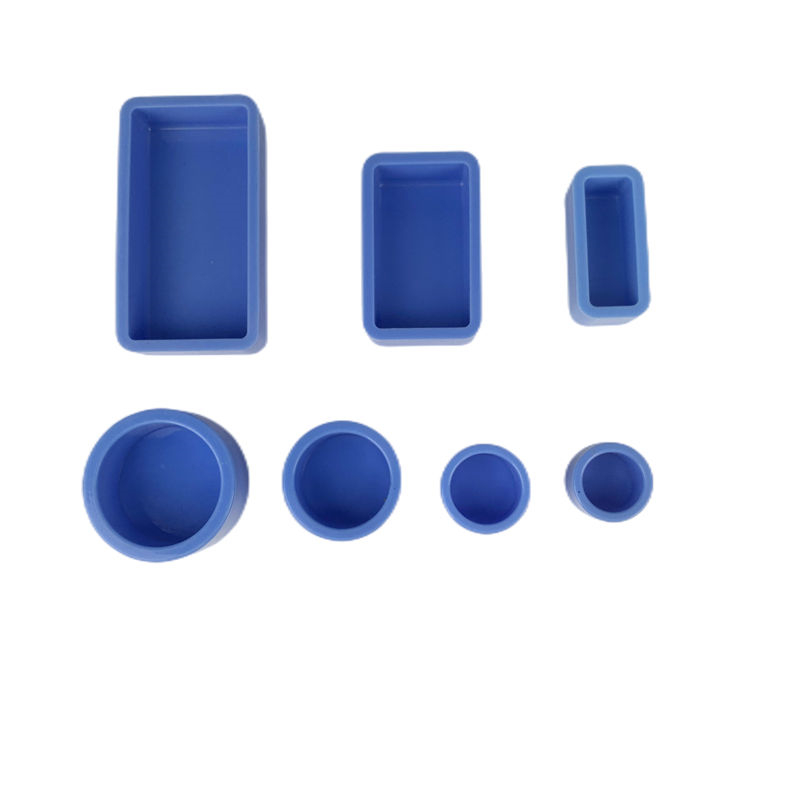
Why must the gold test be embedded first? Can't it be grinded?First, conclusion: For most metal samples, mooring is not an option, but a prerequisite for quality assurance.
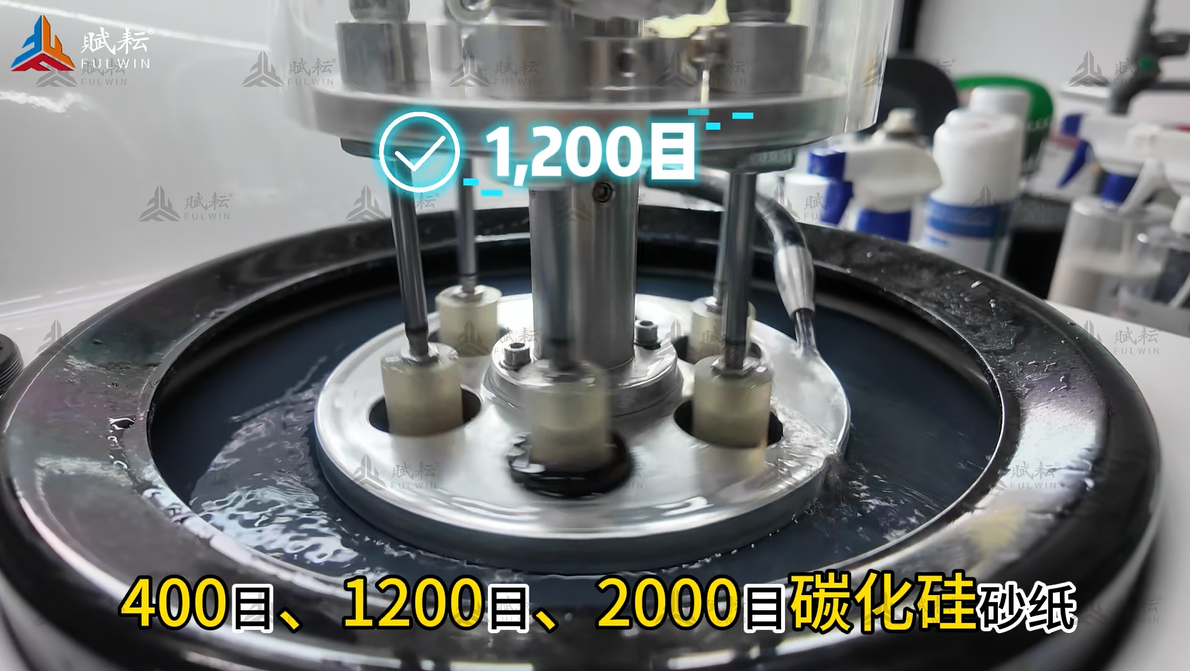
It addresses four main issues:Protect Margins- The most vulnerable to grinding is the edge of the specimen (reverse angle), and the gold eye is often seen in the edges, such as surface seepage of carbon, coating, welding edges. The mosaics are rounded around, so that the edges do not collapse.
Unlock Size and Grab- The sample is of different sizes and irregular shapes, and the grinder is difficult to bind; it is better to operate with a uniform specification and the results can be repeated.
Support soft/cryl/small- Soft metals, powder, thin, strangulation, coating, either in a grind or in a shred.
Segregation and labelling— Stabilize the specimen in the material, and the numbering is written on the outer edge, and multiple samples are not easily confused.
A human saying: "Standing in a suit for the specimen, it is steady in the process of grinding, polishing, and observing.
What should be used when is the 02 gill hot and cold gilded?
This is the most common second choice in the lab, and many people can't take it.
| Dimensions | Thermal mosaic (thermal presses mosaic) | Cold-memboshed (cold bury / room temperature solid) |
|---|
Form Time | A few minutes. Come on. | Ten minutes to hours. |
Combined strength / hardness | Higher. Perimeters protected. | Relatively soft, for fine grinding. |
Thermal effects | Heat impact risk to be assessed | It's basically no heat. |
Apply scene | Conventional metals, batch sample | Fear of heat, fray, holes, large, alien. |
Equipment requirements | Thermal presses mosser + Heat | Cold-mode+ Cold-molecated resin |
How to judge: the specimen is afraid of heat (e.g., gill-fired, soft metals, plastics, welding), perturbing, or too big to reach the heat press, choosing cold mosaics; conventional metals, requiring bulk, fast, first heat mosaics.
Note: The above table is a general one, based on actual material and process.
What about the color of the gill-03? Black, green, red is not random.
Many people ignore that color is not a decoration, but a tool for making samples and observations.
Black— Most common, clear against most metal matrices, suitable for conventional observation and automatic/ manual grinding.
Green— needs to be distinguished from a specific matrix or plastered or to be useful when quickly identifying the sample area during observation.
Red- High contrasts with specimens, visualization when the body looks for edges, marks, and identifies multiple samples.
The practical effects are concentrated on three areas: providing contrasts during observation, reference to determine whether a grinding is in place, and identification markings for multiple samples / multi-process time.
Fuyun FHM1 Thermal Embedded resins provide black, green, red, and position the usual type, covering most of the regular gold-forming sample scenarios, with easy access, size and distribution.
How do you choose the 04s of typhus-styre? A set of FHM series can see all the models.
From the Fuyun product parameter table, it can be seen that thermal mosaic is based on a total of 6 models, with a clear division of work by use:
| Model | Colours | Feature | Recommended |
|---|
FHM1 Usual Type | Black / Red / Green | Medium contraction rate, medium grinding rate | Normal model use |
FHM2 Transmitting Type | Black | Power transmission. | Portable samples (plating, electrolytic polishing) |
FHM3 Porcupine | Black | Low contraction, low grinding. | Protection of hard-quality edges |
FHM4 White | White | Medium contraction rate, medium grinding rate | Normal model use |
FHM5 Transparency | Transparent | Clean and transparent | Transparent, poignant specimens |
FHM6 Soluble | Transparent | Soluble, samples unlost | Samples to be recovered, / Size / Deep |
General: FHM1 (Black / Red / Green), FHM4 (White) most commonly used, with faster grinding.
Plating, electrolytic voltage: Select the FHM2 transport type.
Hard materials, high demand for edges: select FHM3-padron, good grinding, low contraction rate.
Transparent sample, multi-pore sample: Select the FHM5 transparent, which allows for a visual view of the internal sample.
Samples are to be recovered, and the dimensions/scales/ layers are required: select FHM6 soluble, and samples can be removed from the mosaics without loss.
Synopsis: You're going to have to watch what you're going to see, the specimens are not afraid of heat, whether you want to recycle it, then the selected material against the model, and you're going to be pretty sure you're not wrong.
How do you set the 05? Pressure, temperature, time, one wrong fire.
The three core parameters of thermal mosaic are rounded and different models are different. Fuyun FHM series are divided into two groups by process:
| Parameters | Common series (FHM1 / 2 / 3 / 4) | Transparent Soluble Series (FHM5/ 6) |
|---|
Embedded Pressure | 20±5 MPa | 15±5 MPa |
Embedded temperature | 140±5 ℃ | 160±5 ℃ |
Temperature Time | More than 10 minutes | 20 min or more |
Cool Time | More than 5 minutes | It's cooling to room temperature in 15 minutes. |
What does each parameter affect:The pressure is low, the specimens and the material are not so tight, they can get off the side, there's a gap.
Over-temperature Zips may cause tissue/hardness effects on heat-sensitive samples, or the material is too soft
Too low / insufficient time / not fully solid, softly embedded, not strong enough
Over the long time, production efficiency is down, and some materials may be too solid.
Reminder: The above is the manufacturer’s reference parameter. Please combine the mosaic, sample and description manual fine-tuning; FHM1 common temperature protection in more than 10 minutes, FHM5 / FHM6 transparent soluble series temperature protection in more than 20 minutes, and do not touch the different cards with a single sense.
The 06s are always off edge, crack, open holes?
This is almost the most ingrained problem in the lab: one half of the polish, one stitch on the edge or one pit.
It's not clean.- The sample is oily, water stains, rusty, sticky with resin. Response: Pre-membedded and dry.
Parameters Not Fit— Low pressure or insufficient temperature, and no alignment or solidification. Response: calibration parameters by machine type.
Thermal expansion difference- The sample is different from the resin thermal expansion factor, and cooling shrinks and cracks / untangles. Response: Controls cooling rate, select the appropriate card number.
Material infestation or expiry- Decline in intensity and emptiness after resin sip. Response: Seal and keep, use during the preservation period.
A practical habit: to clean and dry the specimens together before they are embedded, so that the whole batch is not destroyed.
What about the heat-resilient specimens? Will the heat-smoke change the tissue?
Thermal mosaics are temperature-demonstrable and do have thermal impact risks.
Conventional carbon steel, most alloys: 140 ± 5 °C (FHM1 commonly used) short temperature protection, usually insufficient to change room temperature tissue and can be used comfortably.
/ Re-fire, soft metals, plastics, welding, temperature-sensitive coatings: To be evaluated, re-incorporated with cold mosaics, if necessary.
Key decision: Based on your test criteria and historical data, you can check it against it.
Boundary alert: Thermal mosaics are not all-powerful, nor the hotter the better. Temperature and time are based on solid, unharmed samples.
The 08-gill gives you a reusable gold-synthesis frame.
If you're gonna meet a future, you can get a set, you can choose the heat or cold, you can choose the color, you can determine the parameters, you can follow the four steps:
And first, ask: Is the specimen afraid of heat? Fear, walk cold, and be afraid, continue.
And ask: "Short, fast, strong?" Yes, "Heat-scrap."
Colour: needs to compare and identify, black / green / red as required.
Parameters: based on the manufacturer ' s parameter, a combination of machine fine-modulations; sample clean-drying and re-entry.
Remember: the minutes of this chain's input tend to determine whether the hours of grinding and observation that follow are done in vain.
Embedding is an invisible, but decisive, part of the gold-formula. It's not complicated, but the details determine the outcome.
Fuyun focuses on gold-styre-styre-styre-styre, FHM1-FHM6-Systems, covering a wide range of needs, from common use, conductive, margin, white, transparent, soluble, from 500g to 18kg, and from the factory to the factory, to the custom, to the quality, to the stock. Selective suggestions or parameters are needed.
 Official hotline:021-61905265


 Published:2026-10-09
 Views:
 Source: