The polishing is a key consumption material in the polishing of gold-forming samples and materials, and determines the quality of the surface, the efficiency of processing and the cost. The grinding is not grinding, the particle size is not scratching, and the form is not working. This paper combines the actual product system of the Fuyun (FULWIN) Golden Shaking Series with a four-dimensional decomposed light-selector logic, with a quick comparison of common materials, to help you select the right one.
The one-size-fits-all principle: first, to set the type of grinding material by the hardness of the work-load material, then to determine the particle size by the stage of the process, and then to determine the shape of the product by the pattern of use.
01 Warms type: determined by material hardness
The hardness of the different grindings varies. The hardness of the grindings should be higher than the work, but the excess hardness can cause overslapping and deep scratches on the soft materials.
Reference principle: Hard materials select hard grinders, soft materials select soft grinders.
Diamond
The hardness of nature is highest and the cutting power is extremely strong. Single crystals are used for the rough-to-screw of superhard materials, hard alloys, and multi-crystals are highly poignant and unprejudicable, and are suitable for optical crystals, ceramics.
Note: Soft materials are easily used to cause overslapping and deep scratches.
Alumiña Aluminium oxide
General-type grinding, medium-intensity, high-photernity, high-scaling, high-square-level, gold-phase/rock-phase analysis, metals, ceramics, composites, precious stones.
Suitable: Black / non-ferrous metals and high-light polishing of materials.
Silica.
Nano-grade grinding, chemical machine polishing (CMP) main, electronics, semiconductor high flattening, mirror-level fine-shows preferred.
Note: The removal of scratches is not a good option for rough, middle-pasting.
Cerium / Chromium oxide / Silicon carbide
The cerim chemical polishing is strong and suitable for glass, optical components; the surface is highly photolytic after chromium oxidation; and the carbonized silicon is high in hardness and has a high cutting power and suitable for rough grinding.
CLASS: Silicon carbide is used in soft materials to produce deep scratches.
Grind selection stenography: super hard / hard alloy → gold; gold / metal / composite / aluminium oxide; glass / crystal → cerim oxide; electronic / semiconductive fine-swielder / silicate / .
02 Particleity: Decline by stage with process phase
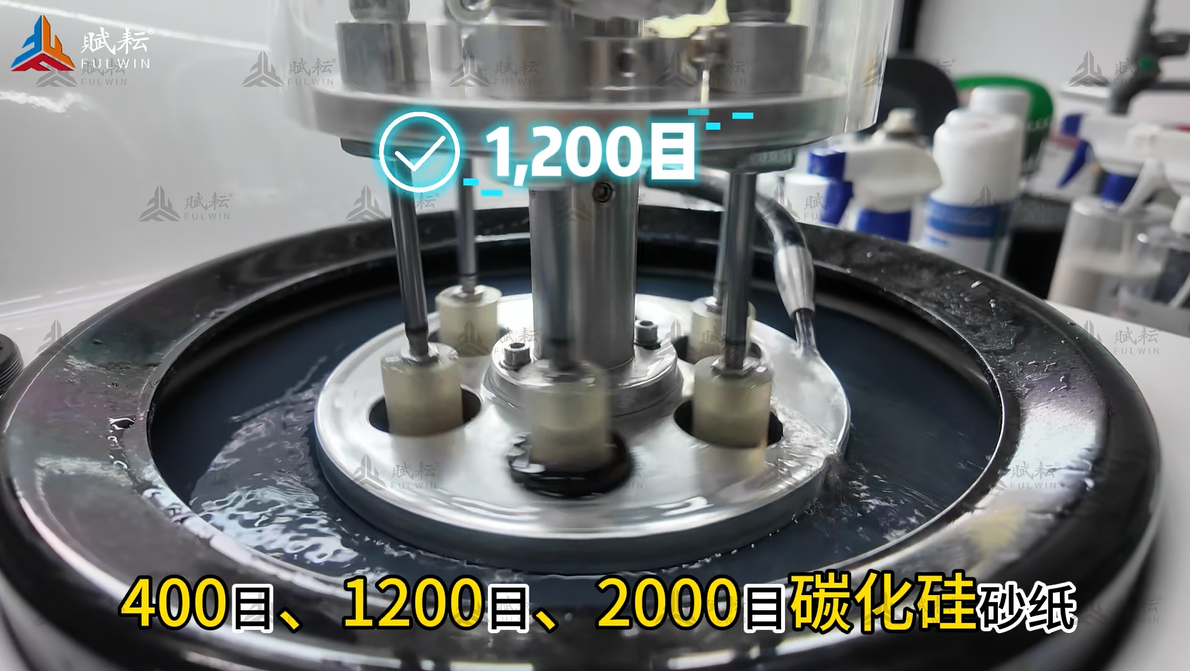
The application of the method is a "broad to fine" process. It is done in one step at the most fine size, without grinding the deep scratches left by the previous process, and at a cost. The standard approach is to move up step by step, with the particle size of each process being only one line more than the previous one, avoiding a "slow cut and more back to work" due to the drop in the grade.
Bold throw.
15 – 40 μm
Fast removal of sawn-cut / grinding of damage layer and deep scratches
Middle Throw
3 – 9 μm
Flatten, tie the barbles and the pruning.
Scratch
0.5 – 1.5 μm
Get high light-precision surface, approach the sample
And finally, you're gonna throw it.
0.02 – 0.25 μm
Nano-level flattening, mirroring / CMP
The larger the particle size (m) the faster it is removed, the thicker it is drawn; the smaller it is, the more light it is, the slower it is removed. The more it is, the more it is, the slower it is.
03 Product form: fit-in scenario
The same grinding, which takes different forms, is used differently from the scene.
Lubricated cooling fluid
Match the grinder drop, cool + lubrication + wash, remove the gold-phase tissue deformation, and apply to the grinding and polishing process.
Suspended polish
The grinding material is evenly distributed in the liquid phase, which is fine by drop, and is equally uniform, and is controlled, and is the dominant form of machine-splatter.
Spraying polish.
Pressure-jet use, with a uniform distribution of diamonds, is suitable for quantitative spraying and is fast and efficient.
Pour ointment / Powder powder
The anointed body is self-refrigerated, portable; powder can be used to adjust to different processes by placing the slurry as required.
04 Fuyun (FULWIN) Golden Shavers
Fuyun Gold Grilling covers four forms of "Line / Spam / Powder" with a particle size ranging from 0.02 m to 40 m. Below is a summary of the product by product type, recommended range, non-scope, and can be directly cross-referenced.
Shining lubricant cooling fluid
MLB: Grain and polishing of all materials;
MLR: Spraying process for soft materials
MLR Commons Less than MLB; Soft Materials Prefer MLR
Diamond spray.
DPAL/DPA/DPA (Multi-Crystal)/DPA (nami)
Grain polishing, pressure spraying, and smooth distribution of diamonds by needs (0.05-40 m)
Diamond suspended plume.
MDS (single crystal): Ultrahard materials, hard alloy grinding polishing, increasing the grinding rate, and burn protection; soft materials are less effective than multi-chips.
PDS (multi-crystal): Optical crystals, ceramics, super hard materials, plumbing; Brushing is inefficient to remove large scratches.
Aluminum oxide suspended plume
OSP: Gold, Rock, Zero; Black / Non-ferrous Metal, Ceramic, Complex Materials, Gems, Optical Glass, etc., Photo-Photo-Photo-Photo; Unefficient Bold Throwing of Super Hard Materials
Silicon dioxide suspended photoplasm
OP-S: high-level nanoscale flat-smoke for various materials; electron-chemical-mechanical polishing (CMP); rough-smoke, middle-smoke process, low scratching capability
Bold and polished.
DPO: Loading and mechanical grinding of high-hardware materials (hard alloy, alloy steel, high carbon steel); soft materials are prone to overprow
Polluting powder
ALP (Aluminium oxide)/SIP (Silon carbide)/CRP (chromium oxide)/COP (cerimium oxide)/DPP (Folders)
(b) Grain polishing of materials; aluminium oxide for final concentrate of soft materials; cerim oxide for glass, optical components; and diamonds for high hard materials;
Prefer to gold powder for superhard materials; silide / diamond can produce deep scratches or overshows for soft materials
Particle coverage: Diamonds are full of most polished powder from 0.25 m to 40 m; Silicon oxide suspension provides 0.02 / 0.05 m nanometer stept; Chromium oxide is 0.5 / 1 / 3 m (suitable for middle-spilling).
Need help with the speculation?
Send us your work materials, the projectile and the target surface, and Fuyun technical team can help match the most suitable projectile model with the particle size path.
 Official hotline:021-61905265


 Published:2026-10-12
 Views:
 Source: